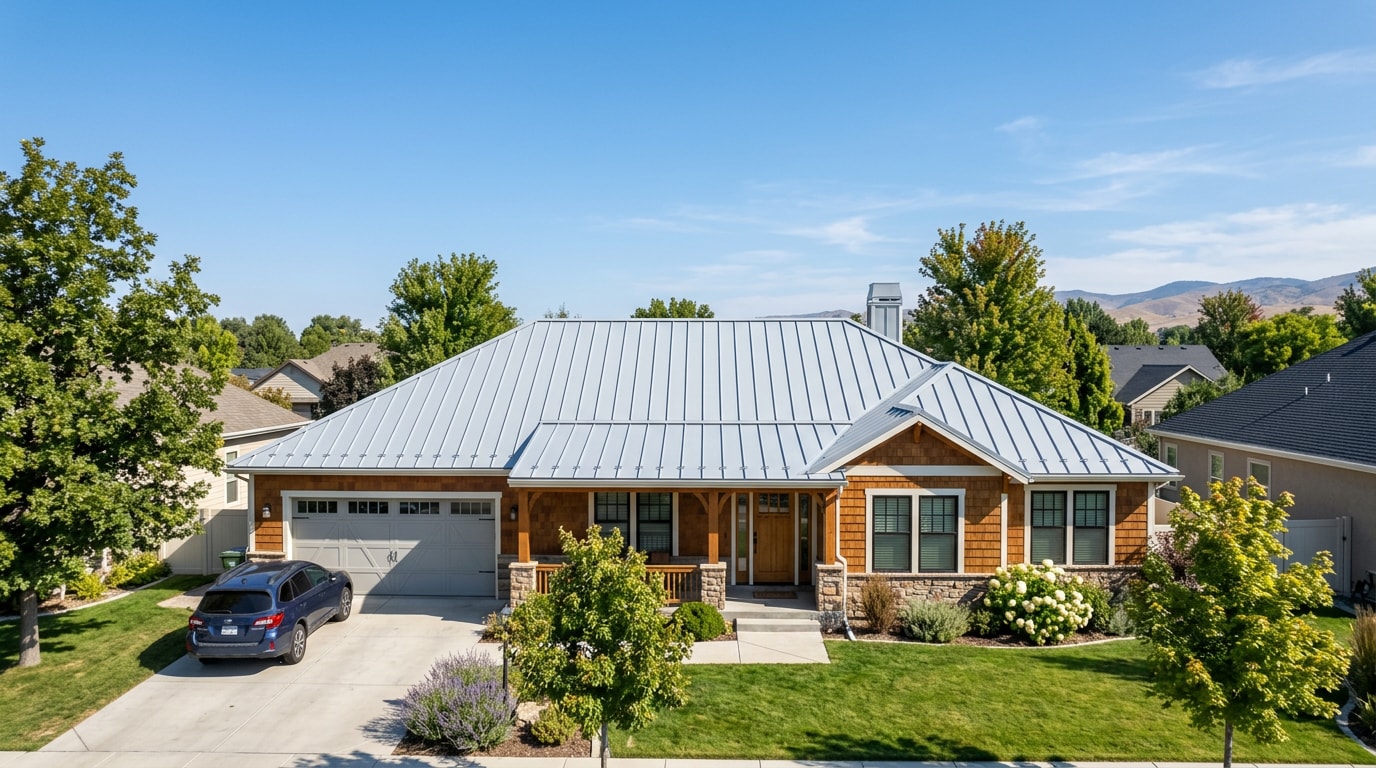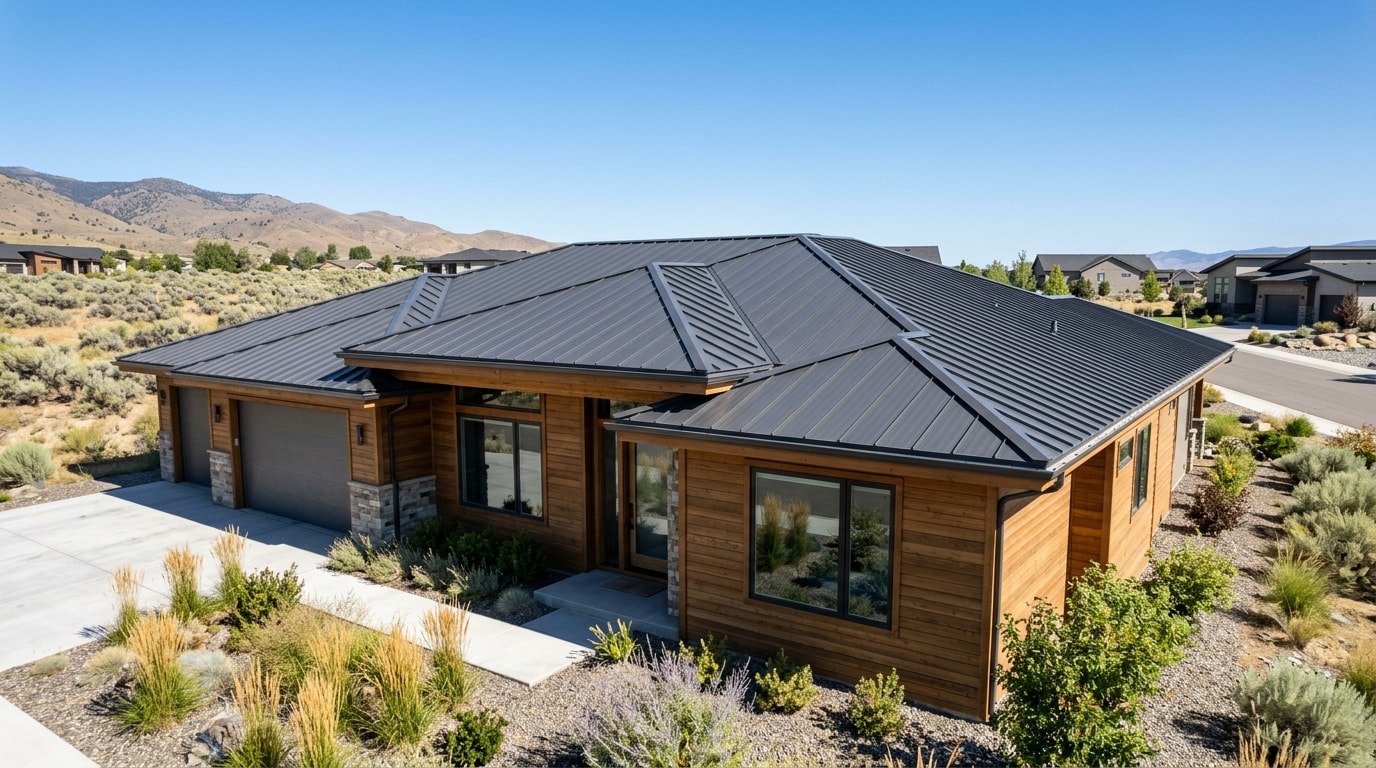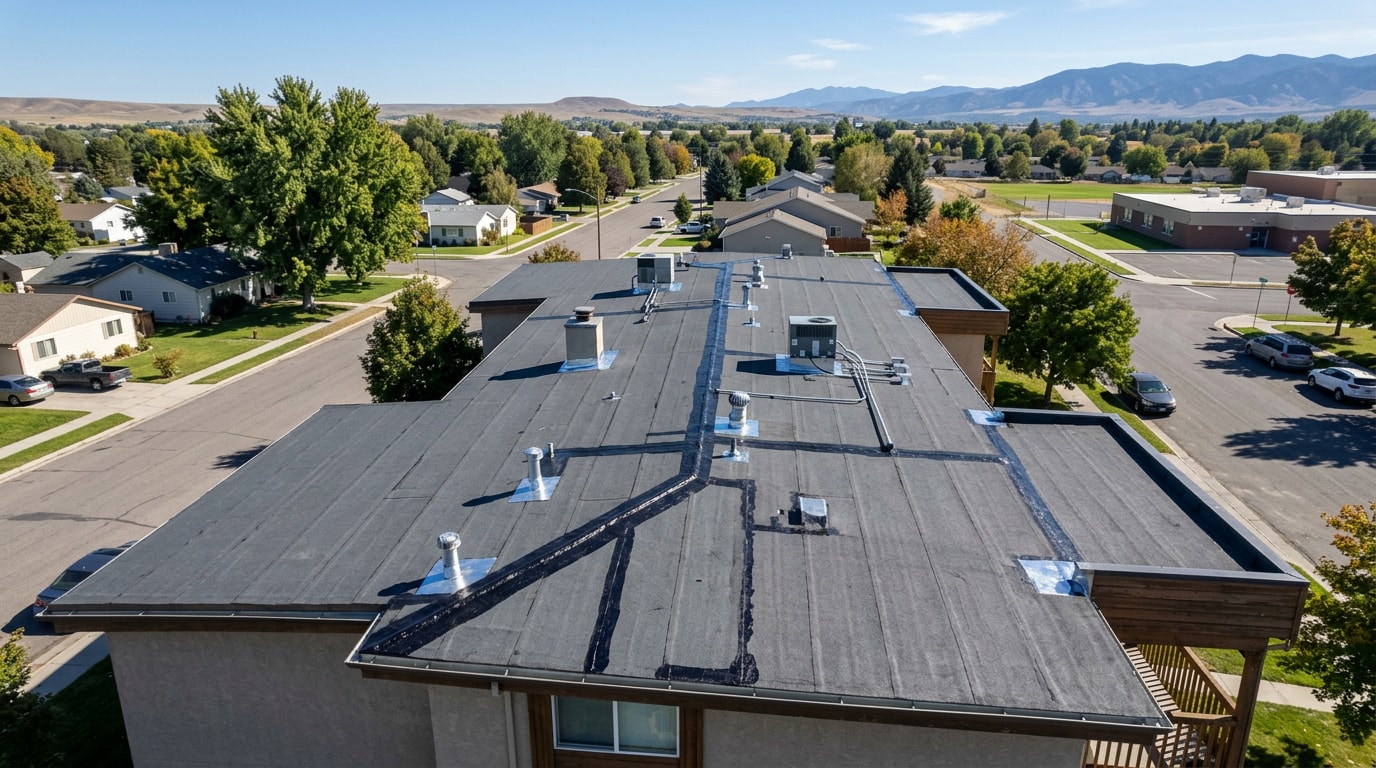
Asphalt flat roof repair in Weiser, ID doesn't work like patching a pitched shingle roof. Low-slope systems fail through ponding water, split seams, and flashing leaks that can travel sideways under the membrane long before a drip ever shows up inside. Idaho's freeze-thaw winters turn a small crack into a structural problem fast, which is exactly why catching it early saves thousands.
Flat Roof Repair Services We Offer in Weiser, ID
Flat roof repair covers a range of asphalt-based systems, including built-up roofing (BUR) and modified bitumen membranes. Before choosing a fix, it helps to understand the specific repair types below. Low-slope roof repair in Weiser almost always starts with identifying where water is actually entering, not just where it shows up inside.
Explore our full Roof Repair services to see how we handle asphalt and low-slope systems across the area.
Expert Flat Roof Repair
Expert flat roof repair starts with locating standing water, failed seams, and worn patches before any work begins. On most of the Weiser repairs our crews complete, the fix turns out to be a seam reseal and a localized patch, not a full membrane tear-off. A proper repair addresses the underlying cause, not just the visible crack or bubble on the surface.
Roof Flashing Repair
Flashing around vents, parapet walls, and roof edges is where most flat roof leaks start. These transition points flex with temperature changes and can pull away from the membrane over time. Roof flashing repair reseals or replaces this metal and sealant, stopping a flat roof flashing leak before it spreads to the decking underneath.
Broken or Missing Shingles Replacement
Many Weiser properties have a flat section that meets a shingled pitch, and that transition zone takes a beating from wind and ice. Broken shingle replacement in these areas restores the water-tight seal between the two roofing systems. Missing shingles repair at this junction is a small job that prevents a much bigger leak if ignored.
Emergency Roof Repair
Active leaks after a storm need a fast response, not a scheduled appointment next week. Emergency roof repair in Weiser typically includes temporary tarping and patching to stop water intrusion the same day. An emergency flat roof leak can cause interior damage within hours, so same-day mitigation matters more than a permanent fix at that stage. Request a free estimate and we'll prioritize active leaks first.
When Your Flat Roof Needs Professional Attention in Weiser, ID
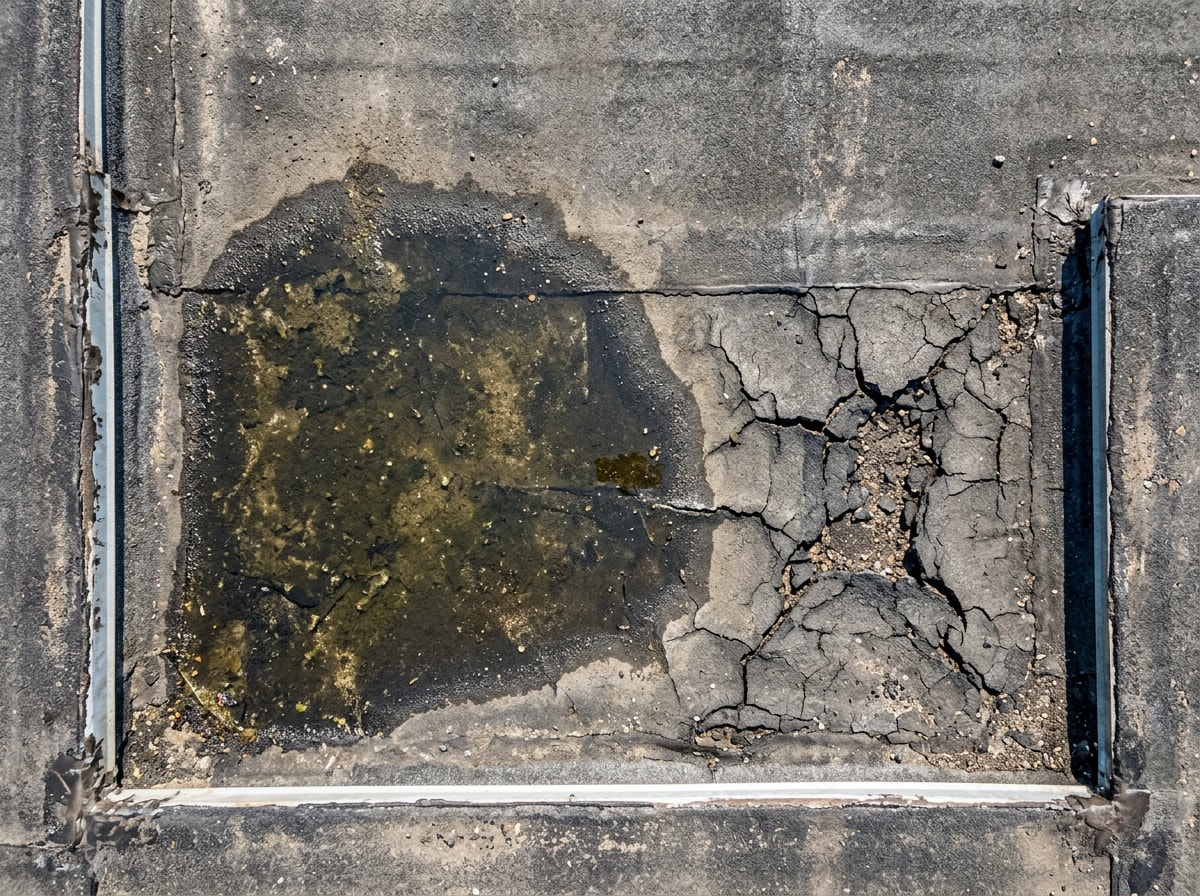
A flat roof needs professional attention when you see ponding water lasting more than 48 hours, bubbling or cracked membrane, separated seams, or fresh ceiling stains inside the building. These are reliable flat roof warning signs that indicate active or imminent leaking rather than cosmetic wear.
You can run a basic self-check before calling anyone:
- Walk the perimeter after rain and note any pooled water that hasn't drained within two days.
- Check the attic or top-floor ceiling for discoloration, soft spots, or a musty smell.
- Look for lifted seams, exposed fasteners, or cracked caulk around vents and edges.
- Note any granule loss or bubbling across the membrane surface.
Knowing when to repair a flat roof usually comes down to catching these signs before a small issue becomes a structural one.
Roof Leak Detection and Repair
Flat roofs are harder to trace than pitched roofs because water can travel sideways under the membrane before it ever drips through the ceiling. Roof leak detection on a low-slope system often requires more than a visual check. Flat roof leak repair only works if the actual entry point has been found first.
Infrared Leak Detection
Infrared leak detection uses a thermal roof scan to spot temperature differences caused by trapped moisture beneath the membrane. Wet insulation holds heat differently than dry insulation, and the camera picks up that contrast without tearing into the roof. We've run this scan on older BUR roofs around Washington County and found wet insulation pockets several feet from where the ceiling stain actually appeared, which is exactly the kind of miss a visual-only inspection leaves behind.
Storm Damage Roof Repair
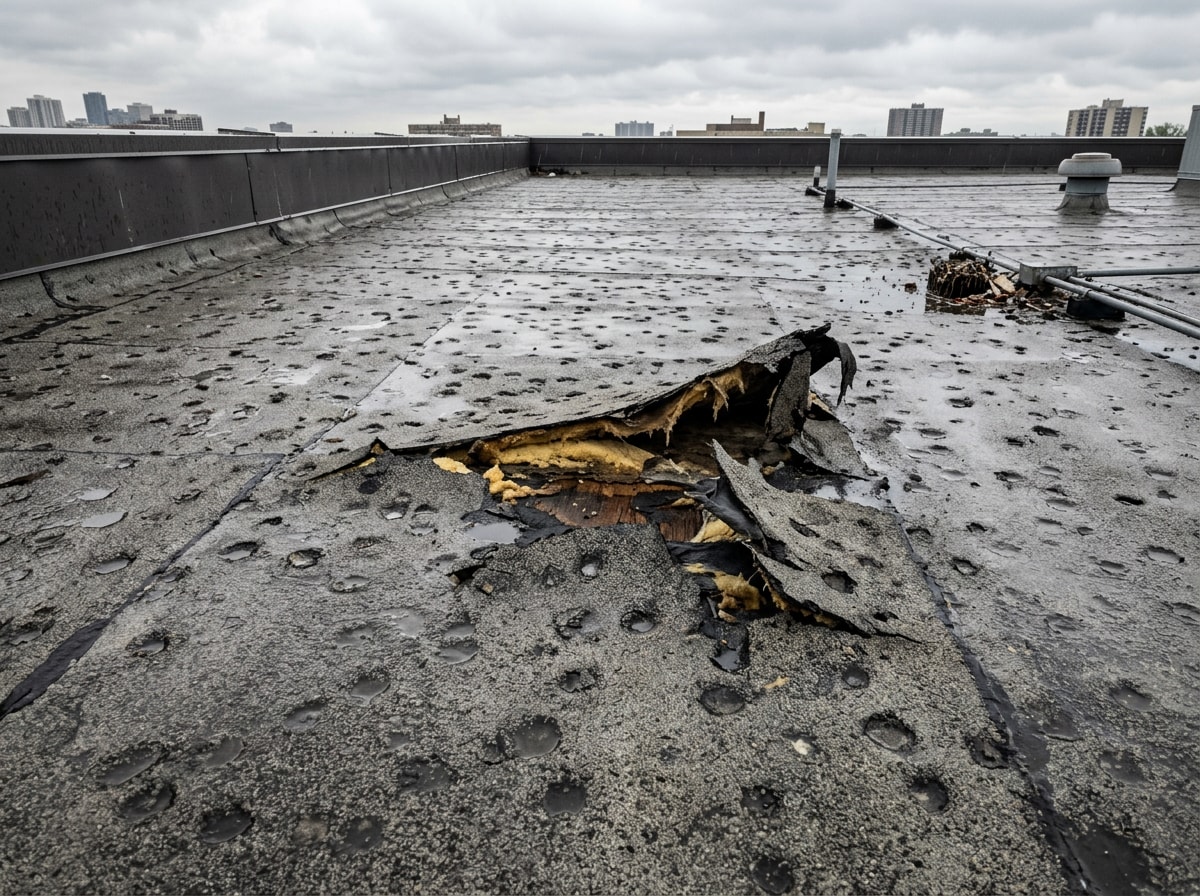
Weiser sees its share of hail, high wind, and heavy snow loads, and flat roofs take that impact differently than sloped ones. Storm damage roof repair addresses punctures, membrane tears, and displaced flashing after severe weather. Hail damage flat roof repair is common after spring and summer storms roll through the valley.
Insurance Claims Assistance
Documenting storm damage correctly makes a real difference in how an insurance claim is processed. A contractor can provide photos, a written inspection report, and measurements that support a homeowner's claim. Roof insurance claim help typically includes this kind of storm damage documentation gathered right after the event, before cleanup or temporary repairs change the scene.
See our Storm Damage Repair services for more on how this process works, or check out our storm damage repair guide for Twin Falls, ID for a closer look at the documentation process.
How Idaho Winters Damage Your Roof (And What to Watch For)
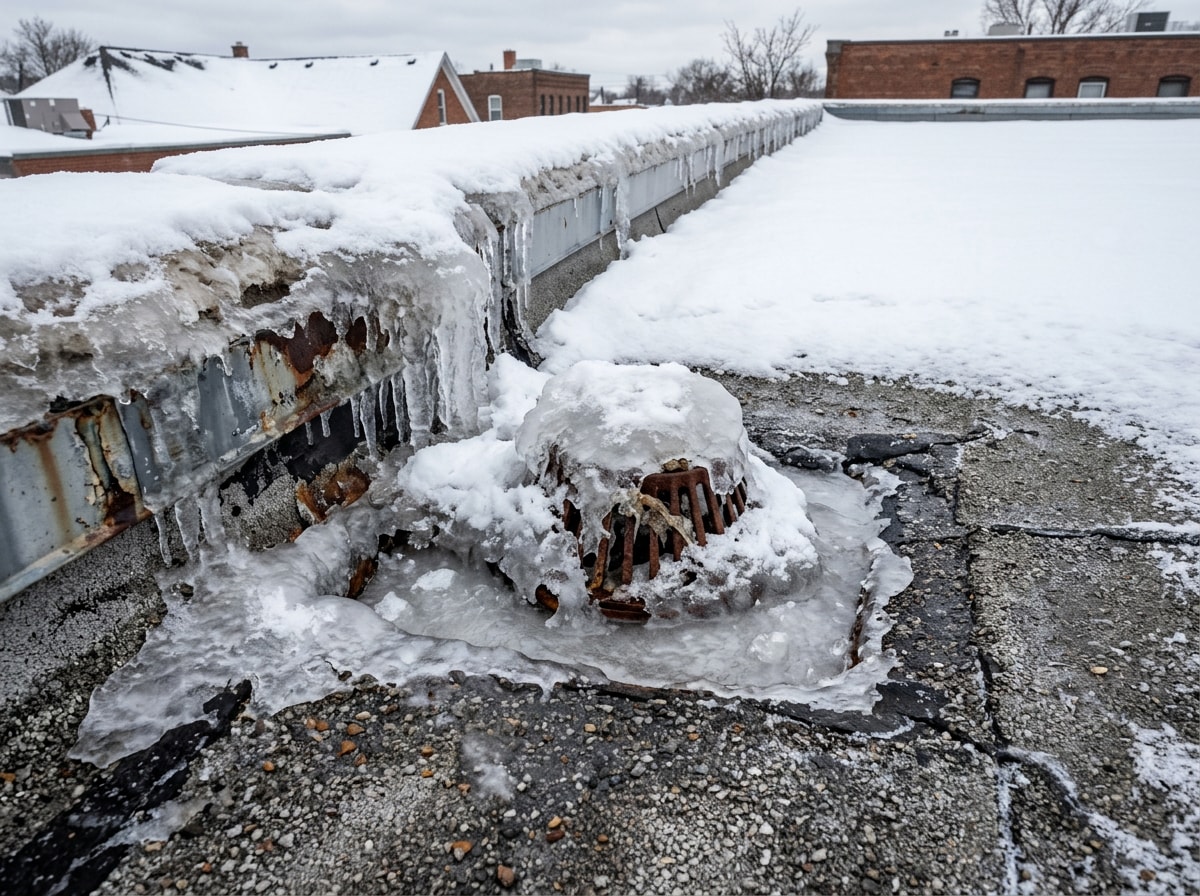
Idaho winter roof damage on flat and low-slope asphalt membranes often comes from freeze-thaw cycling rather than a single storm. Water sits in low spots, freezes, expands, and gradually widens cracks in the membrane with each cycle.
This happens differently than on a pitched shingle roof, where water sheds instead of pooling and refreezing in place. A frost occurs when temperatures reach or fall below 36°F, a freeze at 32°F or below, and a hard freeze at 28°F or below , and the National Weather Service's freeze data for southwest Idaho shows this region cycles through those thresholds repeatedly across a typical winter.
Flat roof ice buildup adds weight and can block drains, forcing melting snow to back up under the membrane edges. Clearing heavy snow accumulation before it compacts into ice is one of the simplest preventive steps a flat roof owner can take each winter.
Roof Waterproofing
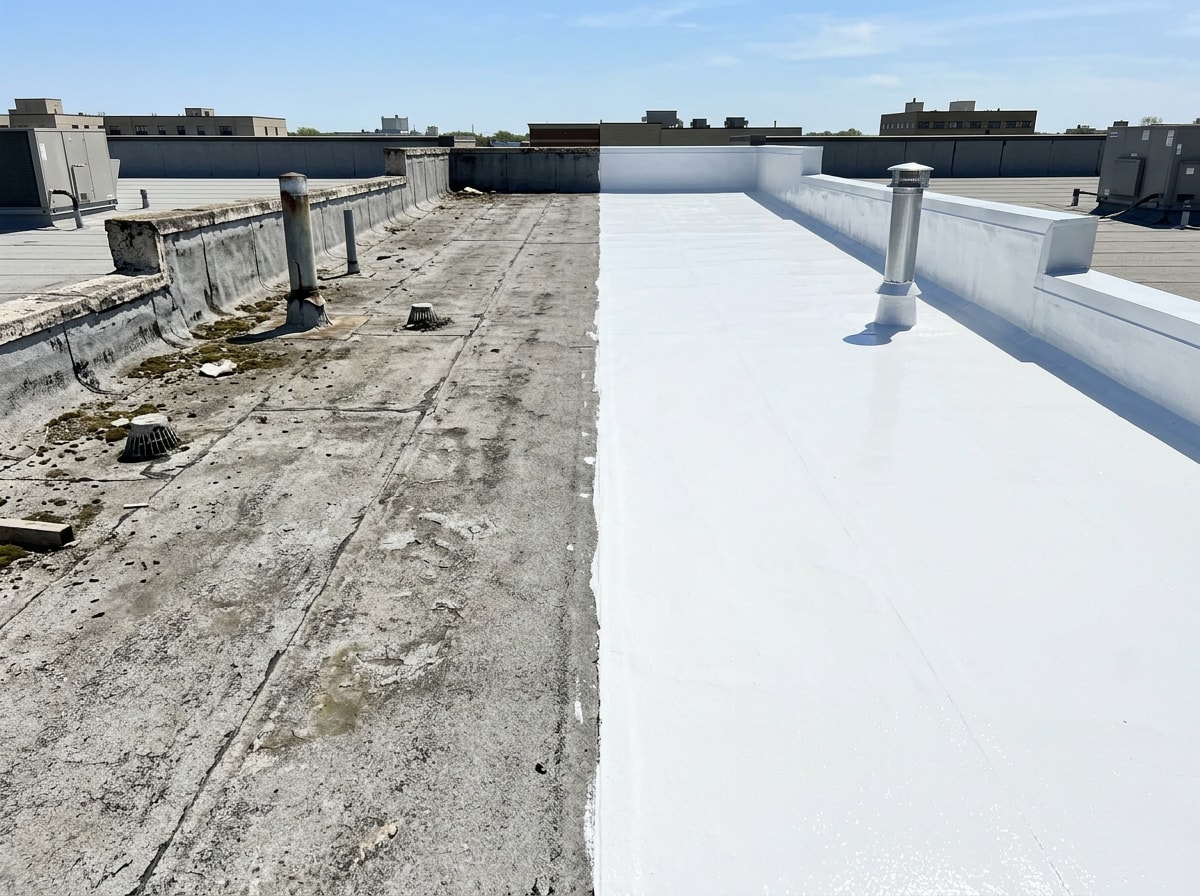
Waterproof coatings and membranes work as both a repair measure and a preventive one for asphalt flat roofs. Roof waterproofing seals minor imperfections across the entire surface rather than addressing just one leak point. A flat roof coating can meaningfully extend a roof's useful life when applied before serious membrane failure sets in.
Leak-Proof Coating for Flat Roofs
Elastomeric and acrylic coatings create a flexible, leak-proof roof membrane over an existing asphalt surface. This flat roof coating stretches with temperature changes instead of cracking, which matters through Weiser's freeze-thaw swings. For an aging roof that isn't ready for full replacement, coating is often the most cost-effective way to buy several more years of service.
Roof Repair vs. Roof Replacement: How to Know Which One You Actually Need
A flat roof generally needs replacement rather than repair when it's past 75–80% of its expected lifespan, has recurring leaks in multiple areas, or shows widespread membrane failure instead of isolated damage. Repair makes sense for younger roofs with a single, identifiable problem.
A simple threshold can help with this decision:
| Factor | Likely Repair | Likely Replacement |
|---|---|---|
| Roof age | Under 15 years (asphalt BUR) | Past 20 years or original lifespan |
| Leak history | First or isolated leak | Repeated leaks in different spots |
| Ponding water | Small, drains within 48 hrs | Large areas, standing for days |
| Membrane condition | Localized cracks or seams | Widespread blistering or brittleness |
This framework isn't exact for every property, since deck condition and prior repair quality matter too. A physical inspection is still the best way to confirm when to replace a flat roof versus patch it. Roof replacement scope in most jurisdictions traces back to the International Code Council's residential roofing provisions, which spell out when a full tear-off to the deck is required versus a recover.
If replacement turns out to be the right call, see our Roof Replacement services for next steps.
Choosing the Best Flat Roofing Materials for Weiser, ID Properties
Even a repair search matters here, since patch material has to match, or can upgrade, the existing roof system. Here's a quick look at the material options available for Weiser properties. For more on asphalt-specific repair methods, our Asphalt Roof Repair in Mountain Home, ID guide covers techniques that carry over directly to flat and low-slope sections.
Browse our Roof Installation services for full specs on each option.
TPO Roofing (Thermoplastic Polyolefin)
TPO roofing reflects heat well and uses heat-welded seams that resist separation better than older adhesive methods. It's a common choice for low-slope repairs or full overlays because of its lighter weight and moderate cost. Typical TPO flat roof materials last 15–20 years depending on membrane thickness and installation quality.
EPDM Roofing (Ethylene Propylene Diene Terpolymer)
EPDM roofing is a rubber membrane known for flexibility and long-term durability in varied climates. Rubber flat roof repair usually involves seam tape or liquid patch products rather than heat welding. EPDM holds up well against UV exposure and can last 20-plus years with routine maintenance.
PVC Roofing (Polyvinyl Chloride)
PVC roofing offers strong chemical and fire resistance, making it a solid pick for properties with rooftop equipment or grease exposure. A PVC membrane flat roof is often recommended over TPO or EPDM when a Weiser property has specific fire-code or chemical-exposure concerns. It costs more upfront but tends to perform well over a long service life.
Comparison of Popular Flat Roofing Systems
Choosing between flat roofing systems comes down to budget, expected lifespan, and how easily the material can be repaired down the road. Here's how the main options compare.
| System | Cost Range (per sq ft) | Typical Lifespan | Best Use Case | Repairability |
|---|---|---|---|---|
| Asphalt Built-Up (BUR) | $4–$8 | 15–20 years | Budget-conscious, flat residential/commercial roofs | Moderate, patching works well |
| TPO | $5–$9 | 15–20 years | Reflective, energy-conscious properties | Good, heat-welded seams |
| EPDM | $4–$8 | 20–25 years | Cold-climate flexibility | Good, tape/liquid patches |
| PVC | $6–$12 | 20–30 years | Fire/chemical resistance needs | Good, weldable seams |
This comparison shows asphalt built-up roofing remains a reasonable budget option, while PVC and EPDM trade higher upfront cost for longer service life. When weighing TPO vs EPDM vs PVC, reflectivity is often the deciding factor for energy efficiency. Reflective, ENERGY STAR-qualified low-slope products are built to cut cooling demand in sunnier months, and the U.S. Department of Energy's guidance on cool roof products explains how that savings math works for building owners deciding between membrane types.
Roof Inspection and Maintenance
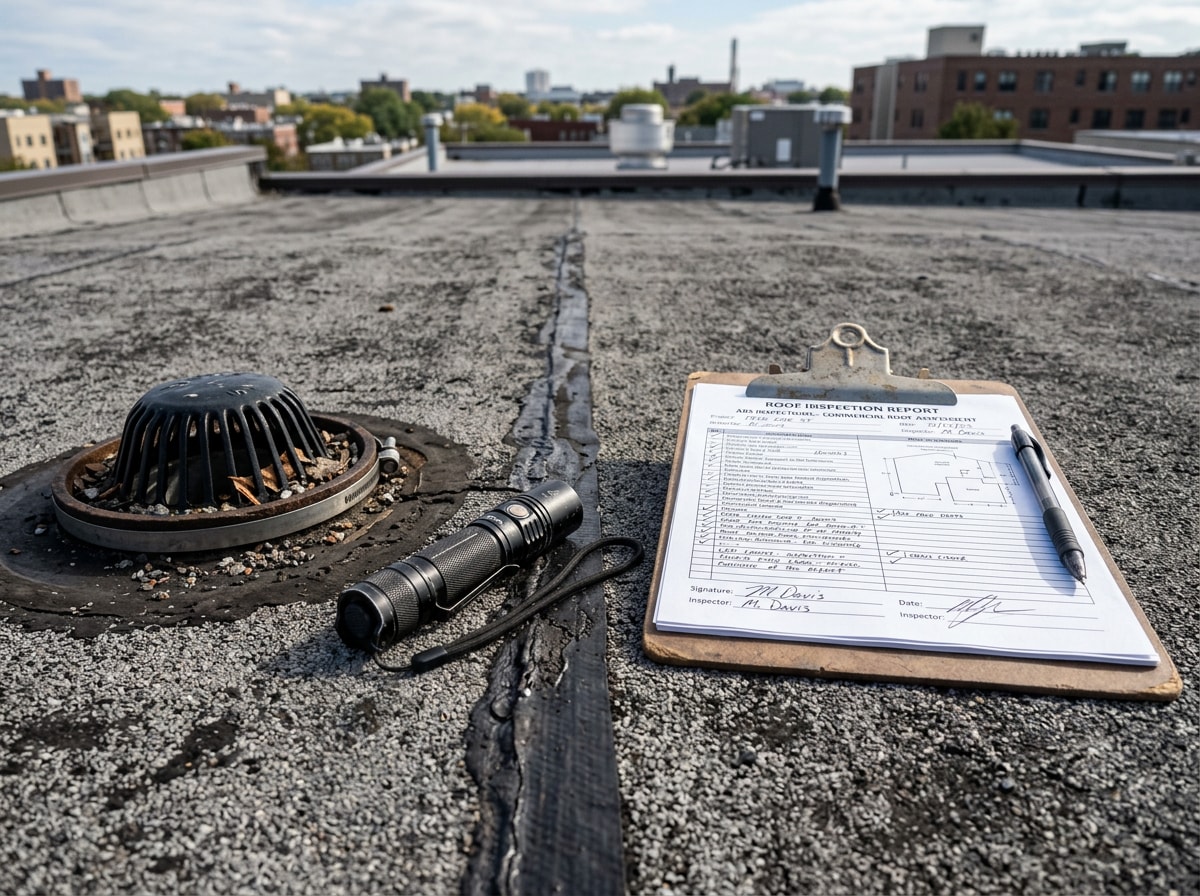
Flat asphalt roofs should be inspected at least twice a year, plus after any major storm. A flat roof inspection checks seams, drains, flashing points, and any areas prone to ponding water. Routine flat roof maintenance that Weiser property owners schedule in spring and fall tends to catch small issues, like a lifted seam or a clogged drain, before they turn into leaks.
Regular maintenance doesn't just prevent leaks. It also extends the roof's overall service life and keeps warranty coverage intact on newer systems. Skipping inspections is one of the more common reasons a repairable issue turns into a full section replacement. Our Roof Inspection services cover this twice-a-year check as a standalone visit if you're not ready for repair work yet.
Bullseye Exteriors is based locally and works throughout the Treasure Valley; visit our Weiser, ID service area page to see the neighborhoods we cover, or head to our home page for the full range of exterior services beyond roofing. If your flat roof is showing any of the warning signs above, get a free estimate and we'll put eyes on the actual problem before recommending a fix.
FAQ
How much does a flat roof replacement cost?
Flat roof replacement cost varies widely based on material choice and square footage, generally ranging from $4 to $12 per square foot installed. A small residential section costs far less than a full commercial roof. Getting a site-specific estimate is the only reliable way to know your actual number.
How long does a flat roof last?
Flat roof lifespan depends heavily on material: asphalt built-up roofing typically lasts 15–20 years, TPO around 15–20 years, EPDM 20-plus years, and PVC up to 30 years with proper maintenance. Climate and installation quality affect all of these ranges.
Why is my flat roof leaking?
A flat roof usually leaks due to ponding water, failed or separated seams, flashing pulling away from edges, or a membrane that's simply reached the end of its service life. Pinpointing the exact cause typically requires a close inspection or leak detection scan.
How do you fix a flat roof that holds water?
Fixing a flat roof that holds water usually means more than patching. Tapered insulation, added drains, or slope correction address the actual cause. A simple ponding water fix without correcting drainage often fails again within a season or two.
Can a flat roof be repaired instead of replaced?
Yes, in most cases, as long as the damage is isolated and the roof hasn't reached the end of its expected lifespan. A roof with a single leak source, a roof under 15 years old, and a membrane that's still flexible is usually a good repair candidate. Widespread blistering or repeated leaks in different spots point toward replacement instead.
What's the best material for patching an asphalt flat roof?
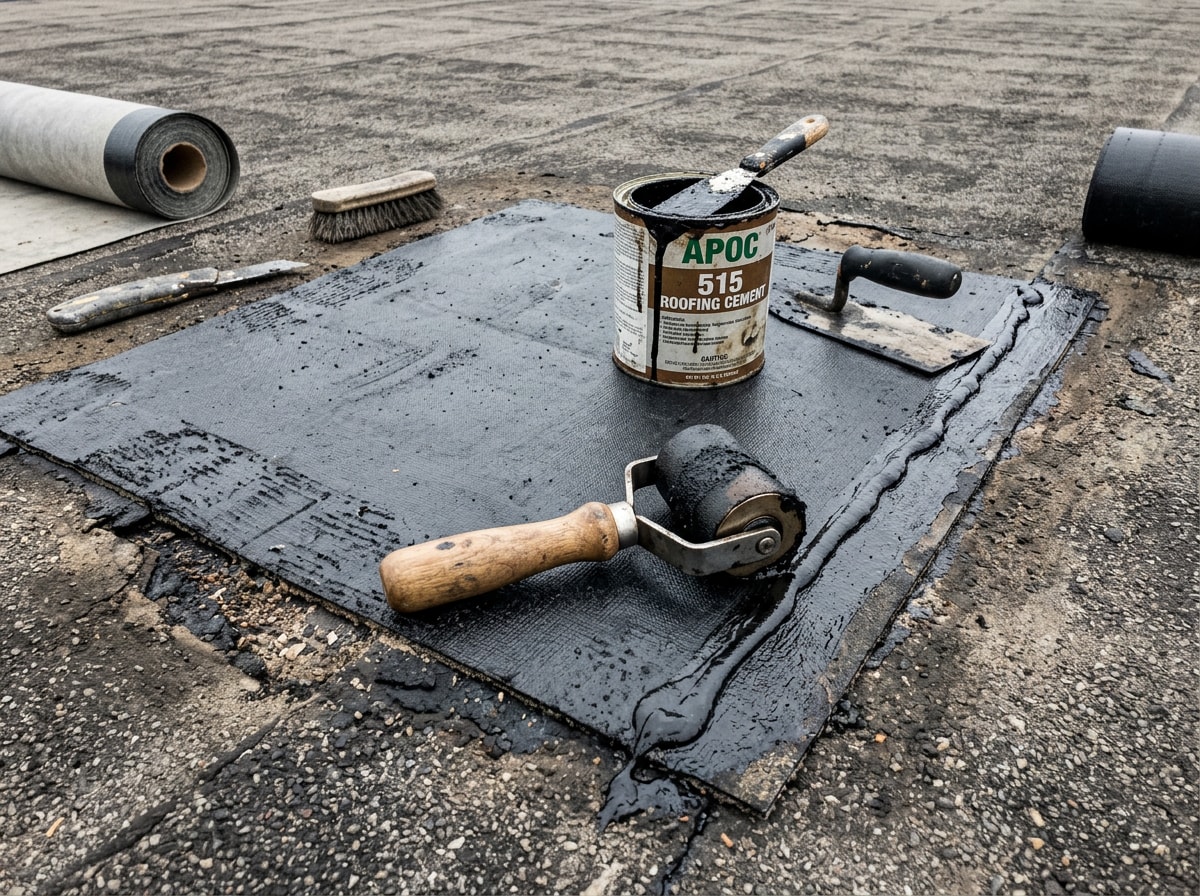
Modified bitumen or asphalt roof cement is the standard patch material on built-up and modified bitumen roofs, since it bonds directly to the existing asphalt layers. On TPO or PVC sections, the patch needs to match the membrane type for the seam to weld or seal properly. Using the wrong patch material is a common reason a repair fails early.
How do you maintain a flat roof?
Flat roof maintenance includes clearing debris and drains regularly, scheduling bi-annual inspections, and repairing small cracks or seam separations promptly. Staying ahead of minor issues is far cheaper than waiting for a leak to appear indoors.