Asphalt roof repair in Mountain Home, ID has to account for something most roofing companies from Boise or out of state never deal with: a high desert climate that bakes shingles all summer and then freeze-thaws them all winter. We've repaired enough roofs across Elmore County to know which failures are cosmetic and which ones are about to become a ceiling stain. Here's what actually matters before you hire someone to get on your roof.
Signs You Need Asphalt Roof Repair, Not Just a Watch-and-Wait
Most homeowners call us after they've already seen a warning sign. Here's what those signs usually mean:
- Curling or cupping shingle edges – usually heat and UV damage from Mountain Home's long, intense summers.
- Granule loss in gutters or downspouts – the protective coating is wearing thin, which speeds up sun damage underneath.
- Dark streaks or soft spots on the ceiling below the attic – almost always an active leak, not a cosmetic issue.
- Shingles missing after a windstorm – common after the gusty fronts that move through along I-84.
- Nail pops visible as small bumps under the shingle surface – a sign of thermal movement working fasteners loose over time.
Any one of these on its own is often a quick fix. Two or three together, especially on a roof past the 15-year mark, usually means it's time for a full inspection, not a guess.
Asphalt Roof Repair Services in Mountain Home, ID
From small leak fixes to full storm-damage restoration, our shingle repair work covers every scenario Mountain Home roofs face. Explore our full roofing contractor services to see how each repair type fits your situation.
Roof Leak and Shingle Repair
Shingle repair usually comes down to a handful of recurring issues: missing or curling shingles, granule loss that exposes the mat underneath, and nail pops that work loose over time. Smaller instances like these can often be patched without a full tear-off. An honest roof repair starts with a look at how far the damage has spread, not an automatic pitch for replacement.
Roof Inspection
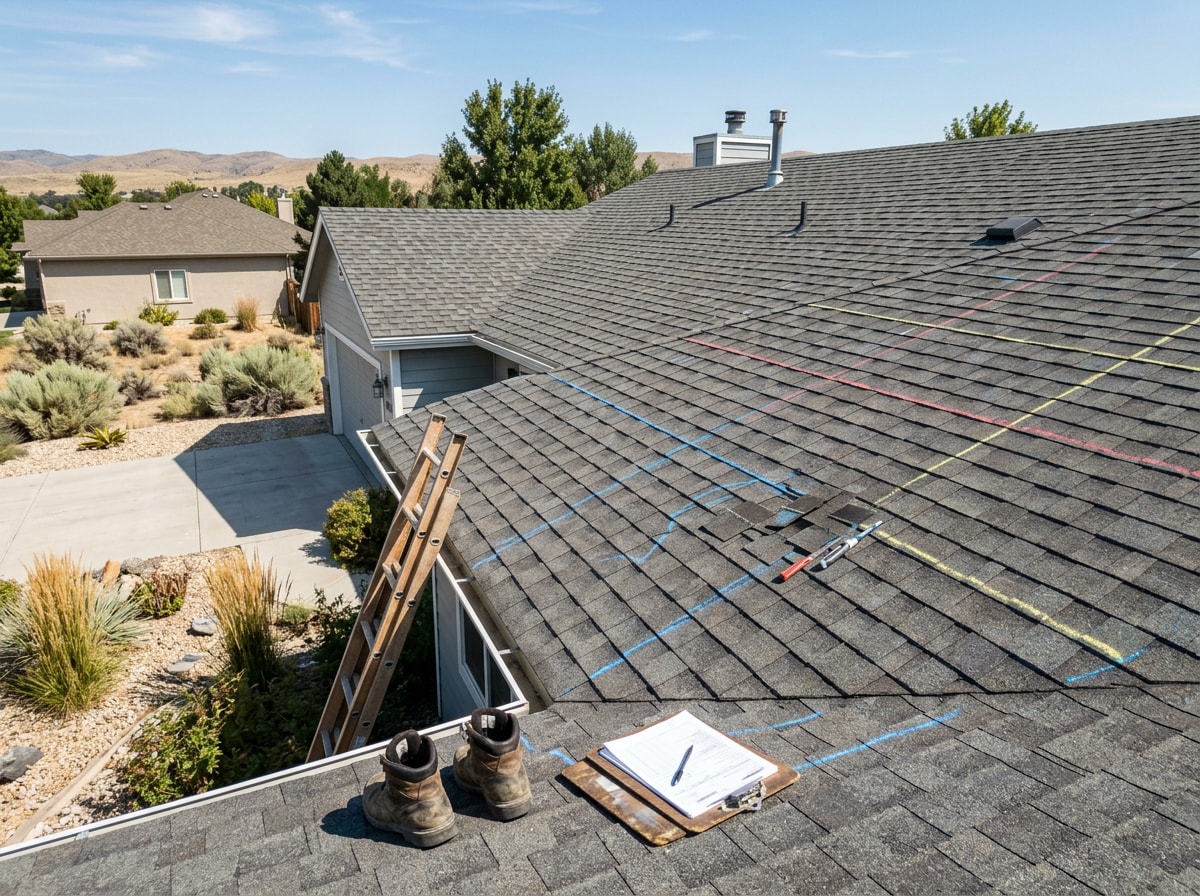
A thorough roof inspection checks flashing seals, valleys, granule wear, and attic ventilation, the areas most likely to hide a developing leak. We offer a free inspection before any work begins, so you know exactly what's wrong and why, explained in plain language.
Emergency Roof Repair
An active leak, storm-torn shingles, or wind-lifted sections after a front blows through all qualify as an emergency. We prioritize these calls and, whenever conditions allow, get a tarp or temporary patch in place the same day to stop more water from getting in.
Roof Replacement
Repair stops making financial sense once a roof is past 20 to 25 years old, has widespread granule loss, or keeps producing new leaks after patch jobs. At that point, roof replacement is usually the smarter long-term move, and we'll walk you through realistic options before you commit either direction. If you're weighing a full tear-off, our residential re-roofing guide for Meridian homeowners covers the decision in more depth.
Storm Damage Restoration
Southern Idaho's spring and summer storms bring hail and sustained wind gusts that can crack shingles or peel them back entirely. Our storm damage repair process documents hail and wind damage thoroughly, which matters if you're planning to file an insurance claim.
Flashing Repair
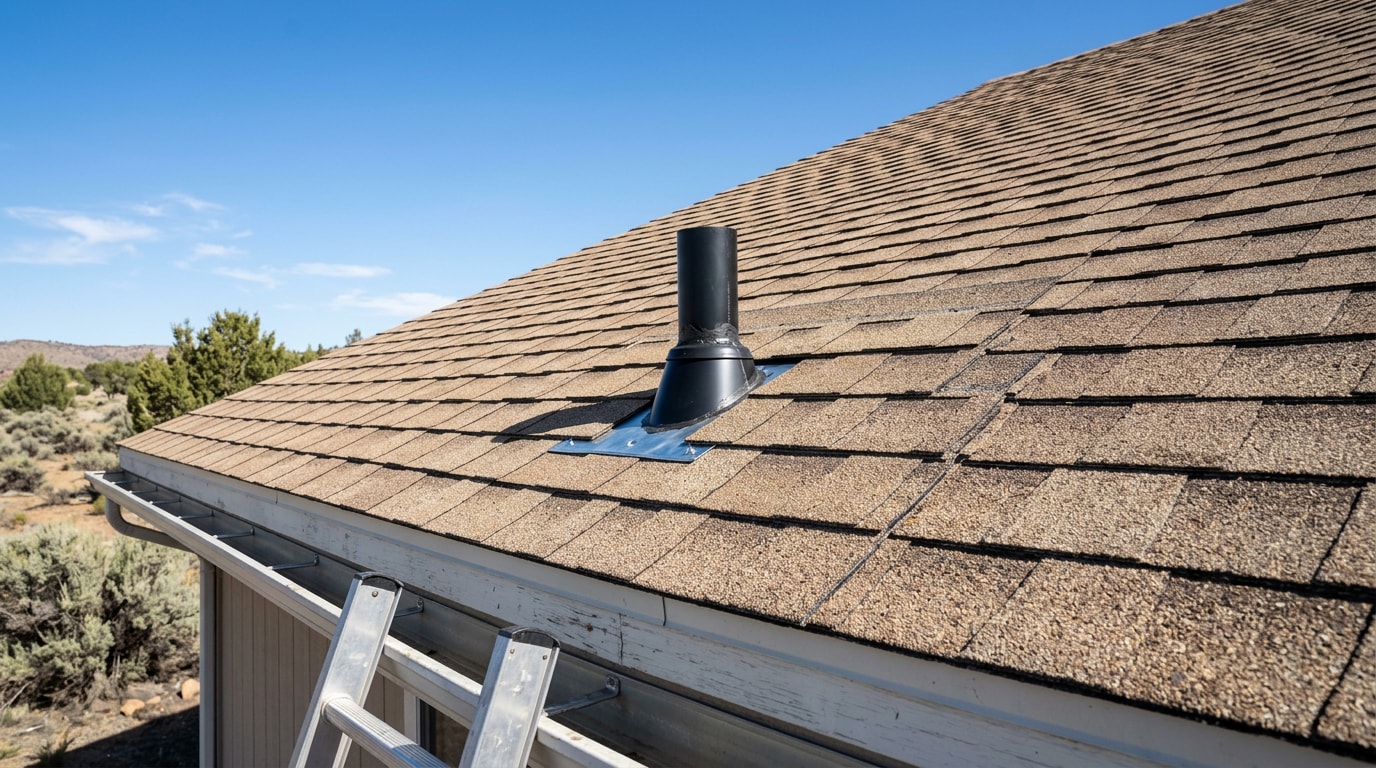
Flashing seals the vulnerable transitions around chimneys, vents, and roof valleys, spots where shingles alone can't keep water out. Flashing repair is one of the most cost-effective forms of leak prevention. A small flashing fix now routinely costs far less than the interior repair a hidden leak can cause after a season of neglect.
Our Roof Repair Process
Every project follows the same four steps, from the first phone call to the final walkthrough on your roof.
- Roof inspection. We start with an on-site evaluation of your existing roof, checking for the damage patterns above and noting anything a homeowner might not spot from the ground.
- Clear written estimate. You get an itemized quote, no vague numbers, no surprise charges later. There's no pressure to decide on the spot.
- Repair day. Our crew arrives with materials already matched to your roof, works efficiently to limit disruption, and keeps you updated if the scope changes once we're up there.
- Final walkthrough. Before we call the job done, we walk the roof one more time to confirm every repair holds, then walk the property with you so you can see the work firsthand.
Materials That Actually Hold Up in Mountain Home's Climate
Not all asphalt shingles perform the same once they hit intense UV exposure, wide day-night temperature swings, and winter freeze-thaw cycles. A few material advances are worth knowing about before you choose a repair or replacement shingle.
Polymer-Modified Asphalt
Blending synthetic rubber polymers like SBS into the asphalt gives shingles more flexibility when temperatures swing from a 95°F afternoon to a cold desert night. Standard asphalt shingles can become brittle and stiff in cold temperatures, while a rubberized polymer-modified asphalt enhances flexibility even in cool conditions. That matters here, because rigid, unmodified asphalt tends to crack under repeated expansion and contraction. Shingles made with this technology may qualify for insurance discounts after passing tough impact-resistance testing , which is worth asking about if hail is a recurring issue on your street.
Smog-Reducing and Reflective Granules
Some manufacturers now coat shingle granules with a photocatalytic compound that breaks down airborne pollutants in sunlight. The granules harness sunlight so their photocatalytic coating transforms smog pollution into water-soluble ions that wash away with rain. It's a small-scale but real contribution to local air quality. Separately, reflective "cool roof" granules bounce more solar radiation away from the shingle surface instead of absorbing it as heat, which can measurably reduce attic heat buildup during a Mountain Home summer.
Nailing Pattern and Wind Resistance
A tighter, more precise nailing pattern along the shingle's reinforced nail zone gives each shingle more holding points, which directly improves resistance to uplift. Given how often open desert terrain around Mountain Home sees strong, sustained wind, correct nailing technique holds a roof together through gusts that would peel back a loosely fastened one.
Asphalt Roof Repair Built for Mountain Home's Weather
Hot, dry summers, cold snowy winters, and persistent desert wind each stress an asphalt roof differently, and repair work here has to account for all three.
Snow and Cold Weather
Ice dams form when heat escaping an attic melts snow that then refreezes at the colder eaves, forcing water backward under the shingles. Evaluating attic insulation and ventilation matters because most experts agree attic insulation should be at least R-30, and good airflow from the soffit area along the underside of the roof and out through roof vents prevents heat loss from the home's interior. Combined with freeze-thaw cracking and the added weight of snow load on older, brittle shingles, winter can turn a small issue into a real leak fast.
Wind and Seasonal Weather
Shingles are most vulnerable to wind uplift at their edges and corners, exactly where nailing and sealant quality matter most. We recommend seasonal checks in spring and fall, timed around Mountain Home's windiest stretches, to catch problems before a bigger storm finds the weak spot first.
What Affects Your Repair Cost
There's no honest way to give a single number for asphalt roof repair cost without seeing the roof. A flashing fix and storm damage across multiple roof planes are not in the same category. Here's what actually moves the price:
| Factor | How It Affects Cost |
|---|---|
| Size of the damaged area | A few shingles costs far less than a full slope |
| Roof pitch and accessibility | Steep or hard-to-reach roofs take longer to work safely |
| Shingle type and availability | Matching older or discontinued shingle lines can add cost |
| Underlying damage | Rotted decking or soaked insulation adds labor beyond the shingles |
| Timing | Emergency, after-hours, or peak storm-season calls can affect scheduling and price |
The clearest way to get an accurate number is a free on-site look, not a generic online calculator. Request a free estimate and we'll give you real figures based on your actual roof.
Why Homeowners Choose Us
Hiring a roofer means trusting someone on your home and your budget. Here's what's worth weighing before you sign anything.
Veteran-owned and family-operated. We're a veteran-owned, family-operated business, and that shapes how we treat every job, with the same discipline and accountability military service instills.
Quality materials, not builder-grade shortcuts. We install polymer-modified and reflective-granule shingle systems built for this climate rather than cutting corners with the cheapest option available.
Workmanship guarantee. Our repairs come with a labor warranty separate from any manufacturer warranty on the shingles themselves. Knowing the difference matters if something needs attention down the road.
Flexible financing. Larger repair or restoration jobs don't always fit neatly into a homeowner's immediate budget, so we offer financing options to spread costs out without delaying necessary work.
Service Area: Mountain Home and Southwest Idaho
As a dedicated roofing contractor in Mountain Home, we also serve surrounding communities throughout southwest Idaho, including areas near Glenns Ferry, Hammett, and the broader Elmore County region. Mountain Home stays our primary focus rather than an afterthought tacked onto a Boise-centered service area, though we also cover Kuna and the rest of the Treasure Valley.
Safety and Sustainability on Every Job
Roofing is one of the more hazardous trades. Falls are the leading cause of work-related injuries and deaths among roofers, and working six feet or more above lower levels puts roofers at risk for serious injury if they should fall. Our crews follow fall-protection and jobsite safety protocols consistent with OSHA's published guidance for roofing contractors on every project. We also prioritize shingle recycling during tear-offs where local facilities accept asphalt waste, reducing what ends up in Elmore County landfills.
FAQ
How do I know if I need a roof replacement or just a repair?
If damage is isolated, your shingles are under 15 to 20 years old, and there's no widespread granule loss, repair usually makes sense. Spreading leaks, roof age near or past 20 years, or storm damage covering large sections typically point toward replacement instead.
How long does a roof replacement take?
Most residential asphalt roof replacements in Mountain Home take one to three days, depending on roof size, pitch, and weather conditions during the project. Complex rooflines with multiple valleys or dormers can extend that timeline slightly.
How soon can you schedule an inspection?
We typically schedule inspections within a few business days of your call, sooner for active leaks or storm-related damage. Call ahead during peak storm season, since scheduling fills up faster after major weather events.
How often should I have my roof inspected?
Most asphalt roofs benefit from an inspection at least once a year, plus after any major storm with high winds or hail. Homes in severe-weather climates, like Mountain Home's wind and hail exposure, often do better on a spring-and-fall schedule so winter and summer stress get caught early.
Do you help with insurance claims?
Yes. We document storm and hail damage thoroughly with photos and detailed notes, then work directly with your insurance adjuster to help support your claim. We can't guarantee claim outcomes, since that decision rests with your insurer, but we make the documentation process straightforward.
Can you repair a roof during Mountain Home's winter?
Minor repairs and emergency tarping can happen in cold weather, but shingle sealant needs warmth to bond properly. We'll tell you upfront if a repair should wait for warmer temperatures or if a temporary fix makes more sense until spring.
Do you work on roofs outside Mountain Home city limits?
Yes. We cover Elmore County homes near Mountain Home Air Force Base, Glenns Ferry, and Hammett, along with the wider Treasure Valley. Visit our homepage to see the full range of services we offer across southwest Idaho.
Ready to get your roof looked at by a crew that actually knows this climate? Get a free estimate and we'll tell you honestly what your roof needs.