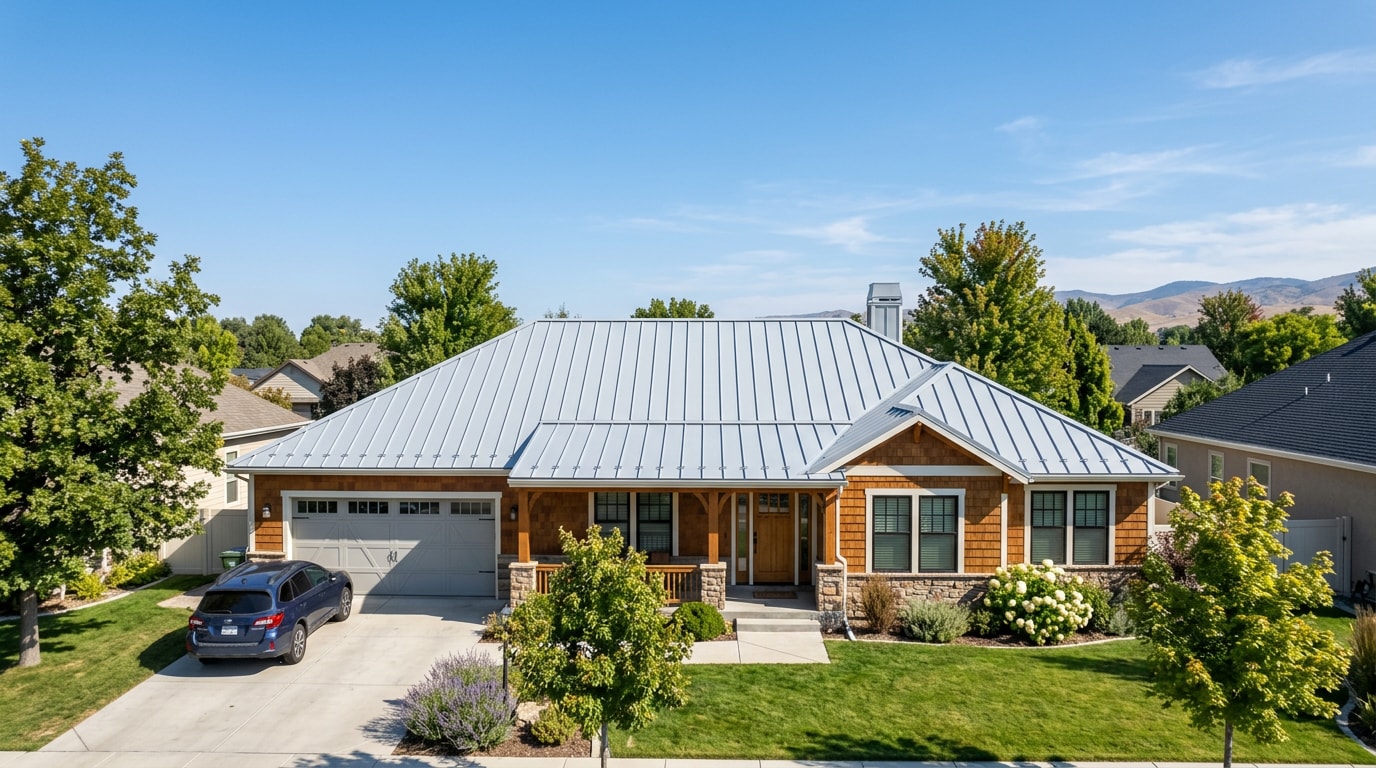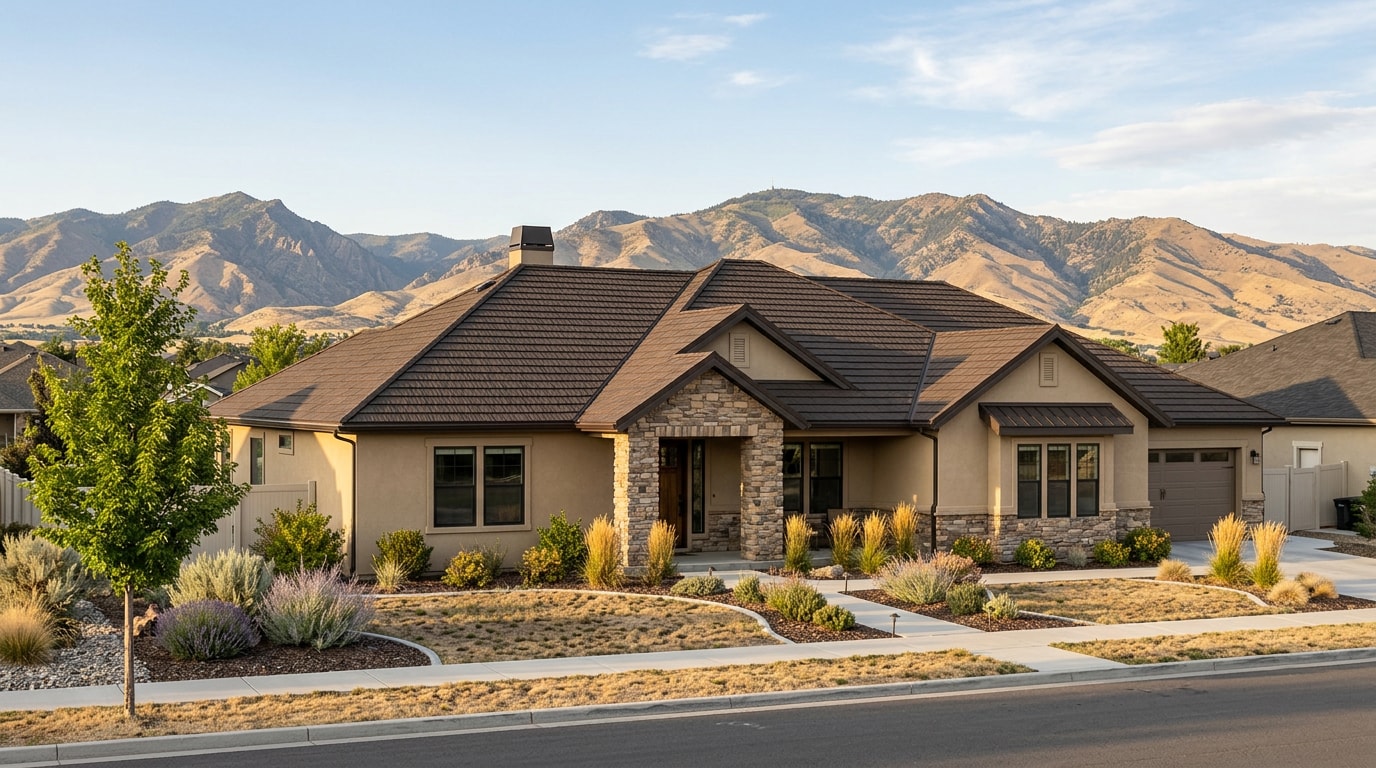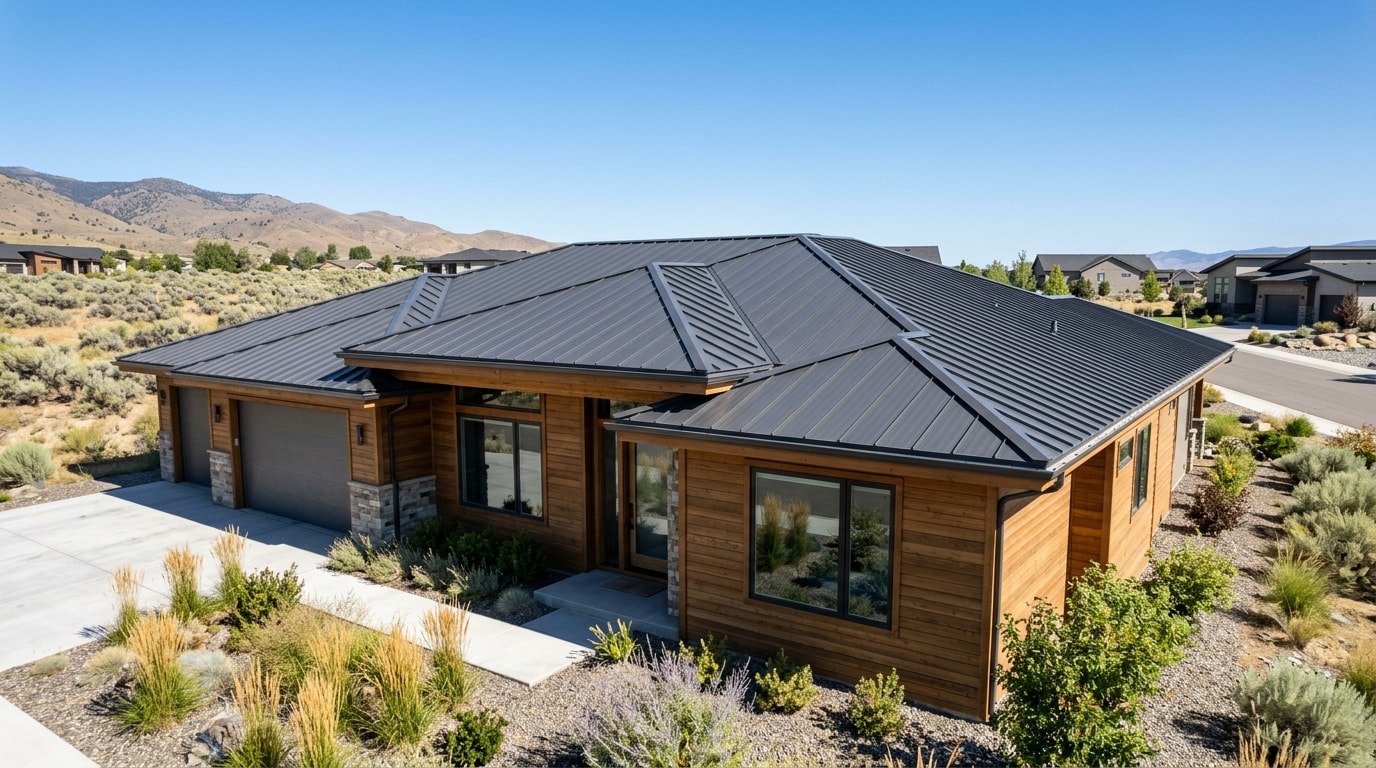
Metal roof installation in Meridian, ID typically runs $5 to $18 per square foot installed, depending on whether you choose exposed fastener panels or standing seam. This guide breaks down real 2026 pricing, the panel types that hold up best in Treasure Valley weather, and the questions worth asking before you sign a contract. We'll also flag a few things other local roofing pages get wrong about permits and contractor licensing in Idaho.
Metal Roof Installation Cost in Meridian, ID: What to Expect
Pricing for a new metal roof in Meridian varies more than most homeowners expect, mainly because "metal roofing" covers several very different products.
Exposed fastener panels, sometimes called corrugated or ribbed panels, sit on the lower end of the price range. Nationally, corrugated and exposed-fastener steel typically installs for $4 to $8 per square foot, while ribbed steel panels run $5 to $9 per square foot . Standing seam systems cost more because of their concealed fasteners and heavier-gauge steel: most residential standing seam projects in 2026 land between $10 and $18 per square foot installed , though premium materials and complex rooflines can push the total higher.
Here's how the main systems compare on a per-square-foot basis:
| Panel Type | Installed Cost (per sq ft) | Best For |
|---|---|---|
| Corrugated / exposed fastener | $4 – $9 | Shops, barns, budget projects |
| Ribbed steel panels | $5 – $9 | Detached garages, secondary structures |
| Standing seam steel | $10 – $18 | Primary homes, steep or visible rooflines |
| Metal shingles (steel/aluminum) | $8 – $14 | Homes wanting a traditional shingle look |
| Copper or zinc standing seam | $20 – $40+ | High-end, architecturally distinctive homes |
Several variables swing those numbers further: roof pitch and complexity, whether the old roof needs a full tear-off or can be overlaid, panel material, and finish quality. A simple ranch-style roof will always price out differently than a steep roof with multiple planes and valleys.
The Metal Roofing Alliance is a non-profit industry trade association that connects homeowners with vetted metal roofing professionals and publishes unbiased buyer's guides , which makes it a solid reference point when sanity-checking a quote. Local labor rates and material availability in Ada County will still shift your actual number up or down. If you'd rather get a figure specific to your home than guess from national averages, you can schedule a free roofing estimate and compare it against what you're reading here.
Why Metal Roofing Works Well in Meridian's Climate
Meridian sits in a high-desert climate that swings from freezing winter mornings to triple-digit summer afternoons, often within the same week. Add in occasional hailstorms and heavy spring snow load, and roofing materials get tested hard every year.
Steel and aluminum panels resist cracking from thermal expansion better than asphalt shingles. They shed snow quickly thanks to their slick surface, and they can take hail impacts that would bruise or puncture traditional shingles.
That performance isn't guaranteed by the material alone, though. A metal roof's long-term durability depends heavily on correct panel spacing, fastening, and ventilation, not just the gauge of steel used. Meridian's own building code amendments set a design roof snow load of not less than a uniform snow load of 25 psf, with a wind design speed of 115 mph for risk occupancy II or less and 120 mph for risk occupancy III or greater . That's the structural baseline any metal roof system installed in the city has to be detailed to meet, which is a more specific number than most Meridian roofing pages mention.
Reflective, cool-roof-rated finishes can also reduce attic heat gain during Boise-area summers. Painted and granular-coated metal roofing can achieve solar reflectance over 70 percent and emittance as high as 90 percent , and on a typical summer afternoon a light-colored, more reflective roof that reflects 80 percent of sunlight will stay about 31°C (55°F) cooler than a darker roof that reflects only 20 percent . If energy performance matters to your decision, the ENERGY STAR key product criteria for roofing page lays out the reflectance thresholds a finish needs to hit to qualify. Our roofing contractor services page covers which systems tend to perform best locally.
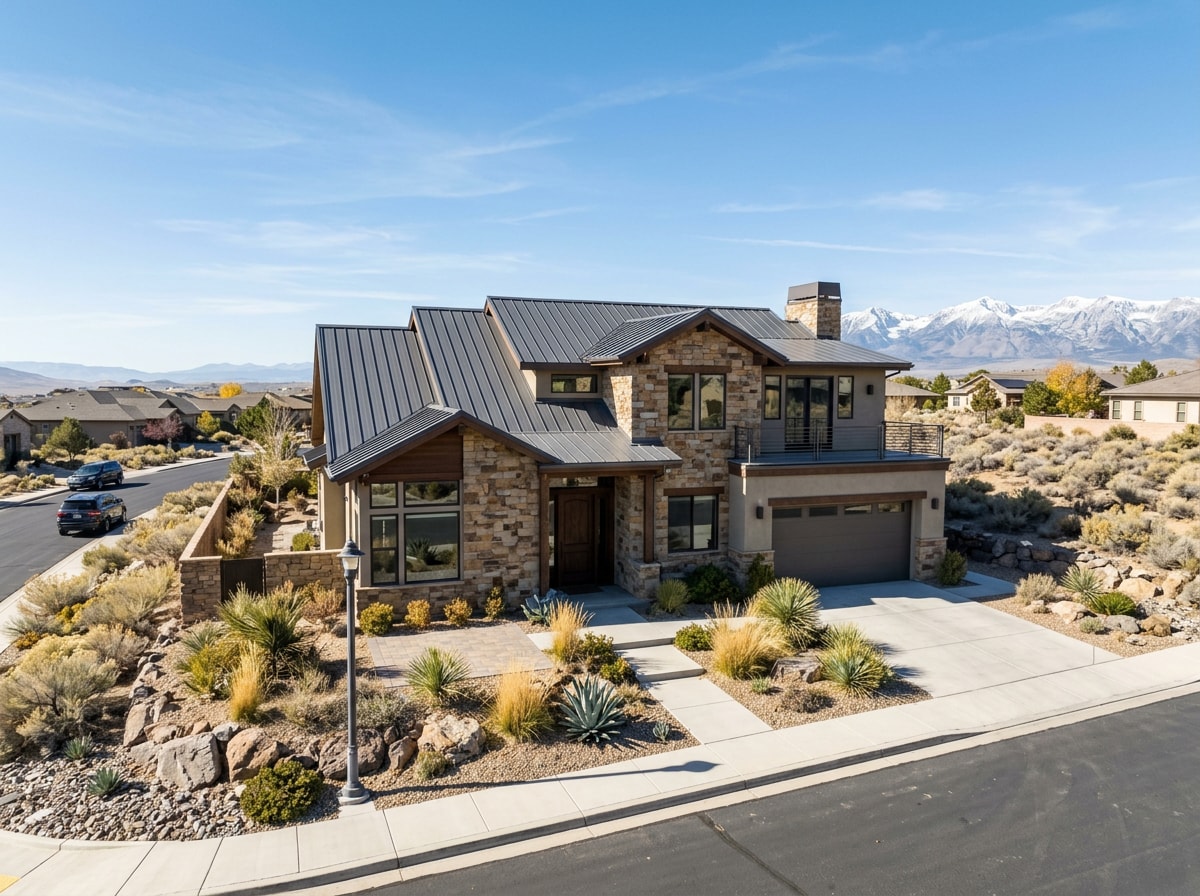
Metal Roofing Systems & Materials
Not all metal roofs are built the same way. Understanding the main panel types helps you weigh upfront cost against long-term performance before narrowing in on a system.
Standing Seam vs. Exposed Fastener: What You're Really Choosing
Standing seam and exposed fastener are the two main metal roof panel types. They differ mainly in how panels attach. Standing seam uses hidden, concealed fasteners for a cleaner look and longer lifespan. Exposed fastener panels use visible screws, which costs less upfront but requires more maintenance over time.
| Standing Seam | Exposed Fastener | |
|---|---|---|
| Upfront cost | Higher | Lower |
| Maintenance | Minimal | Periodic fastener checks |
| Expected lifespan | 40–70 years | 25–40 years |
| Best for | Long-term homeowners, steep roofs | Budget projects, outbuildings |
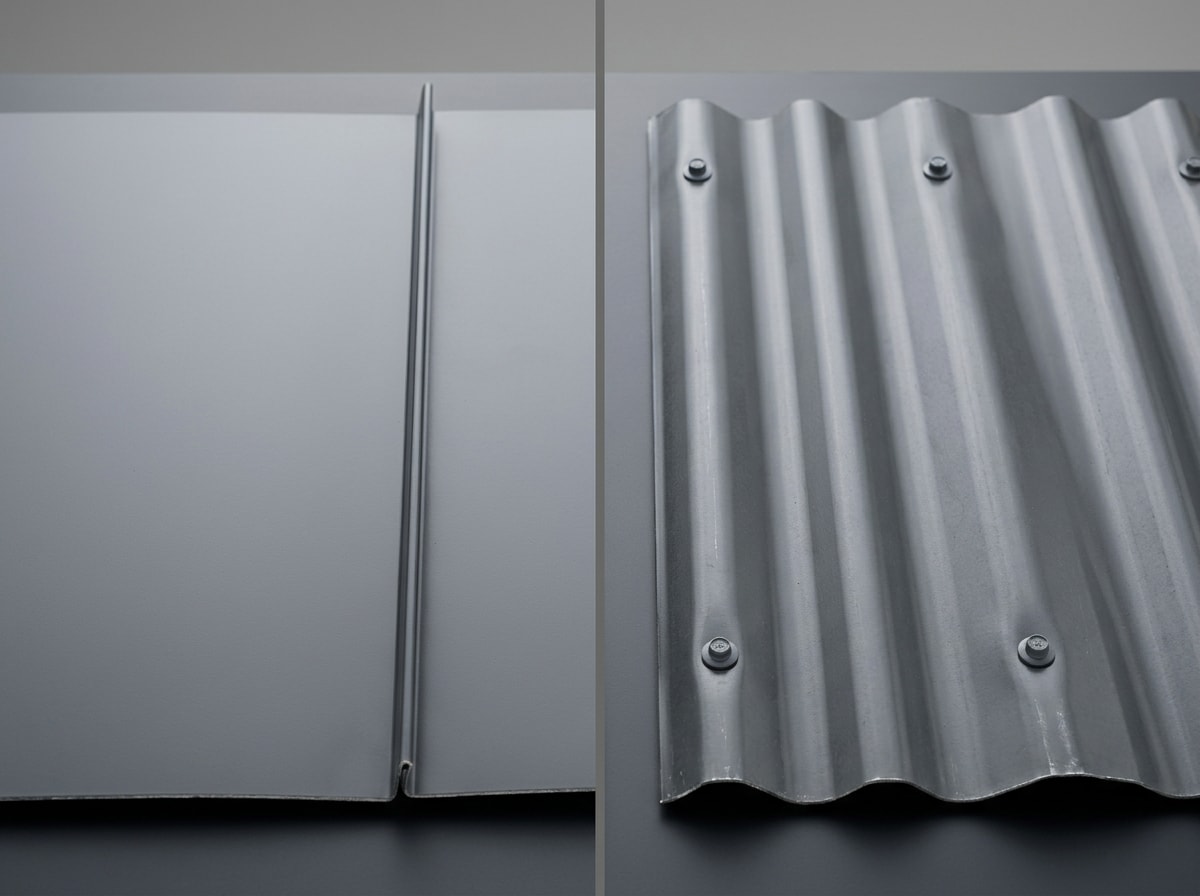
Corrugated & Ribbed Panel Metal Roofing
Corrugated and ribbed panel roofing are usually the same exposed-fastener family, just with different wave patterns. Corrugated panels have a rounded, wavy profile often associated with barns and agricultural buildings. Ribbed panels have flatter sections with sharper vertical ribs, giving a slightly more modern residential look.
Both work well on detached garages, shops, and budget-conscious main-house installs where an agricultural-style aesthetic fits the property. They cost less than standing seam but trade off some of that system's clean, fastener-free appearance.
Metal Roof Accents & Combinations
Some Meridian homeowners skip a full metal roof and instead use metal accents on porches, dormers, or bay windows while keeping asphalt shingles as the primary material. This mixed-materials approach adds visual contrast and highlights architectural details without the cost of a full replacement, making it a popular middle-ground choice on more traditional home styles. If you're still comparing metal against other systems, our metal shingle roof cost guide for Kuna, ID breaks down a third option worth considering.
Our Metal Roof Installation Process
First-time metal roof buyers often aren't sure what the process actually involves. Here's the general sequence most Meridian installations follow, from first phone call to final walkthrough.
- Schedule an estimate. A site visit includes roof measurements, a pitch assessment, and a look at existing decking condition. The contractor should walk through system options based on your home's style before you move toward a formal roof installation quote.
- Get a written quote and timeline. A transparent quote itemizes materials, labor, tear-off, and disposal separately so you can see where the money goes. It should also include a realistic timeline that factors in scheduling backlog and weather windows.
- Tear-off and decking inspection. The crew removes the old roofing material down to the deck and checks for rot or damage before anything new goes down.
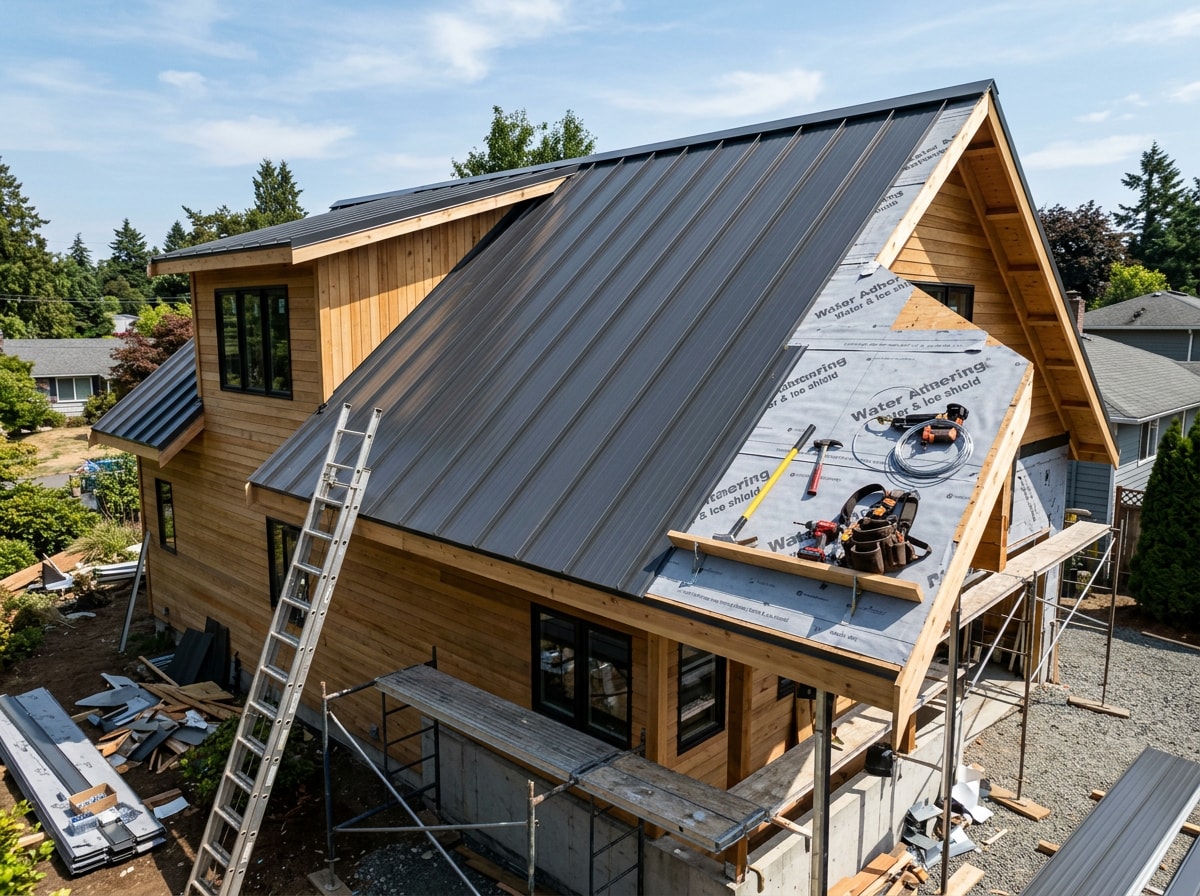
- Underlayment, flashing, and panel installation. This is where panel spacing and fastening quality separate a roof that lasts 40+ years from one that fails early.
- Cleanup and final walkthrough. Crews typically haul debris the same day work wraps and walk the finished roof with you before closing out the job.
On jobs we've completed throughout Ada County, the biggest callback driver isn't a bad panel. It's skipped ventilation detailing at the ridge, something a rushed crew can miss even on an otherwise clean install. If your existing roof is near the end of its life rather than needing a full tear-off decision, our roof replacement page outlines how that process differs from new construction installs.
A Step-by-Step Checklist Before You Choose Metal Roofing
Before signing a contract, running through a short checklist can save headaches later. These are the questions Meridian homeowners most often forget to ask.
- Confirm the right system for your roof design. Roof pitch, architectural style, and any HOA restrictions common in Meridian subdivisions all affect which panel type makes sense.
- Ask about ventilation and condensation control. Metal panels conduct temperature quickly, which can cause condensation on the underside if attic ventilation and underlayment aren't matched to the system. Ask how your installer handles a vented versus sealed assembly.
- Choose a finish with your climate in mind. Reflective coatings lower attic temperatures in summer, and premium Kynar/PVDF finishes resist fading and chalking longer than standard polyester paints in high-UV, high-desert conditions.
- Plan for solar now if you might want it later. Standing seam panels allow clamp-mounted brackets that don't penetrate the roofing material, while exposed fastener panels usually require penetrating mounts.
- Review warranty terms and what they exclude. Most metal roofs carry a manufacturer warranty covering material defects and a separate workmanship warranty covering installation errors. Exclusions often leave out damage from improper ventilation or unapproved repairs, so read the fine print before you sign.
If a recent storm is what's driving the conversation rather than a planned upgrade, our storm damage repair team can assess whether you're looking at a repair or a full system replacement.
What to Look for When Hiring a Metal Roofing Contractor
Not every roofing contractor has deep metal-specific experience, and that gap shows up in callbacks years later. Here's where a lot of local roofing pages get the licensing question wrong: Idaho doesn't issue a traditional contractor license with a trade exam for roofers. Idaho requires state registration, not licensure, and registration turns on proof of $300,000 general liability insurance, workers' compensation coverage, and a fee, not a competency test . That means "licensed" isn't really the right word to look for. What you actually want is an active, verifiable registration with the Idaho Contractors Board, plus proof of insurance before work begins.
Beyond registration status, ask about manufacturer certifications for the specific panel brand being installed. Some manufacturer warranties are void without certified installation. Local experience matters too: a metal roofing contractor who can speak specifically to how panels perform through Treasure Valley hailstorms and winter snow load is a better bet than one offering generic roofing talk.
Finally, ask for references from recent metal roof projects, not just general roofing jobs, and look at photos of completed work with a similar pitch and panel type to your own home. Check our Meridian service area coverage to confirm a contractor actively works in your neighborhood, and don't skip a pre-install roof inspection to document the starting condition of your decking.
How Long Do Metal Roofs Last?
Lifespan depends heavily on the system. Corrugated or exposed-fastener steel commonly runs $5 to $12 installed, while standing-seam steel commands a premium for concealed clips, panel fabrication, and detailed seams , and that extra labor buys more years of service. Standing seam panels on the higher end can last 40 to 70 years, while exposed fastener systems typically last 25 to 40 years, with actual lifespan depending on installation quality, panel material, and ongoing maintenance.
What shortens a metal roof's life fastest is usually poor installation, not the material wearing out. Improperly spaced fasteners, mismatched sealants, and inadequate ventilation cause far more early failures than UV exposure or hail ever will.
Quick Metal Roof Facts Homeowners Miss
Noise. With solid decking and proper underlayment, metal roofs are no louder in rain than asphalt shingles, despite the old tin-roof stereotype.
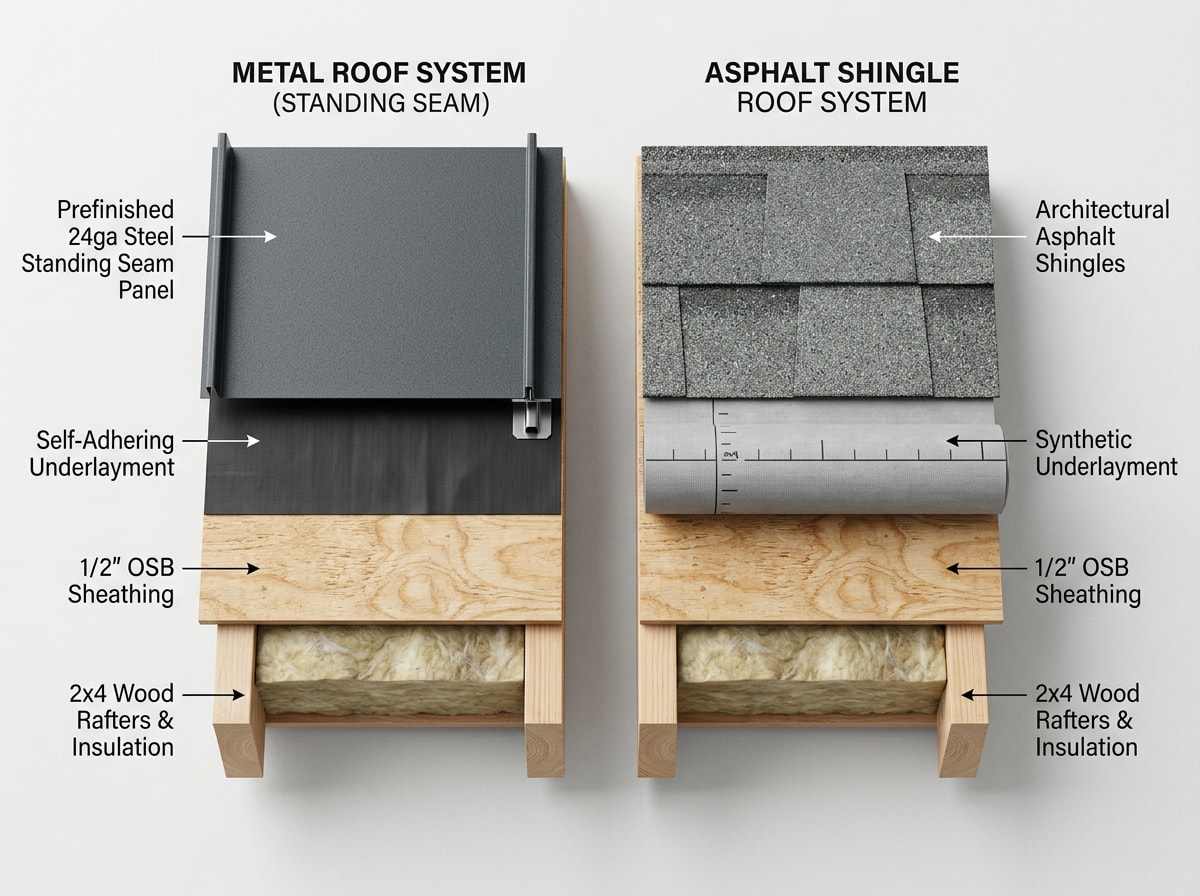
Weight. Most steel panel systems weigh less per square than asphalt shingles, which can reduce structural stress on older homes.
Fire resistance. Metal roofing carries a Class A fire rating, among the highest available for residential roofing.
Hail. Metal can dent under large hailstones, but it typically won't crack or puncture the way shingles can. Cosmetic denting rarely affects water-shedding performance.
These facts matter because many homeowners rule out metal roofing for the wrong reasons before even getting a quote.
Local Angle: Meridian-Area Timing, Storms, and When to Act
Late spring through early fall is typically the busiest roofing season in the Treasure Valley, driven by post-winter storm damage and homeowners wanting projects finished before snow returns. Booking earlier in the season, or even in late winter, often means shorter wait times before installation.
Hail and wind events tend to cluster in late spring and summer, which is also when contractor schedules fill up fastest for both inspections and repairs. If a storm damages your current roof, getting an inspection quickly matters, since insurance claim windows and material availability can tighten as regional demand spikes. Homeowners planning ahead rather than reacting to storm damage generally get more installer choice and shorter timelines.
Metal Roofing Glossary (Plain-English Terms)
Standing seam: a metal roofing system with raised, interlocking seams that conceal fasteners. Exposed fastener panel: a metal panel attached with visible screws through the panel face. Underlayment: a moisture barrier installed between the roof deck and metal panels. Kynar/PVDF finish: a high-performance paint coating resistant to fading and chalking. Eave: the lower edge of a roof that overhangs the exterior wall. Ridge cap: the metal piece covering a roof's peak where two slopes meet.
These terms come up often during metal roofing consultations, so knowing them upfront makes contractor conversations easier to follow. If you want a deeper comparison of underlayment and insulation choices before your install, our residential re-roofing guide for Meridian, ID covers that ground in more detail.
Ready to see what metal roof installation actually costs for your specific home? Get a free estimate from a team that works Meridian roofs year-round, or start at our homepage to see our full range of exterior services.
FAQ
How much does metal roof installation cost in Meridian, ID?
Exposed fastener and corrugated panels generally run $4 to $9 per square foot installed. Standing seam systems run $10 to $18 per square foot. Exact pricing depends on roof pitch, material choice, and whether a full tear-off is needed.
How long does a metal roof installation take in Meridian, ID?
Most residential metal roof installations take two to five days from tear-off to final walkthrough, depending on roof size, pitch, and weather. Larger or more complex roofs with multiple valleys and dormers can take closer to a week.
Do you need a permit for metal roof installation in Meridian, ID?
Yes. A full roof replacement in Meridian requires a building permit, and requirements can vary based on roof type and project scope. Your contractor should pull the permit as part of the job, not ask you to do it yourself.
Does a metal roofing contractor need to be licensed in Idaho?
Not in the traditional sense. Idaho uses a registration system through the Idaho Contractors Board rather than a trade-exam license, so verify active registration and proof of insurance instead of asking whether a contractor is "licensed."
What is the biggest problem with metal roofs?
The most common real drawback is cosmetic denting from large hail on lighter-gauge panels, along with a higher upfront cost compared to asphalt shingles. Poor installation, including mismatched fasteners and inadequate ventilation, causes more long-term problems than the material itself.
What is the 25% rule for roofing, and does it apply in Meridian?
The "25% rule" that circulates online is specific to the Florida Building Code, not a nationwide standard. The baseline model code most of Idaho follows, the International Existing Building Code, doesn't contain a blanket 25% trigger. It does require structural elements to be upgraded if an alteration increases design loads by more than 5%, and it sets separate rules for roof replacement versus roof recover. If someone tells you a flat "25% rule" applies in Meridian, confirm it directly with the city's building department rather than taking it at face value.