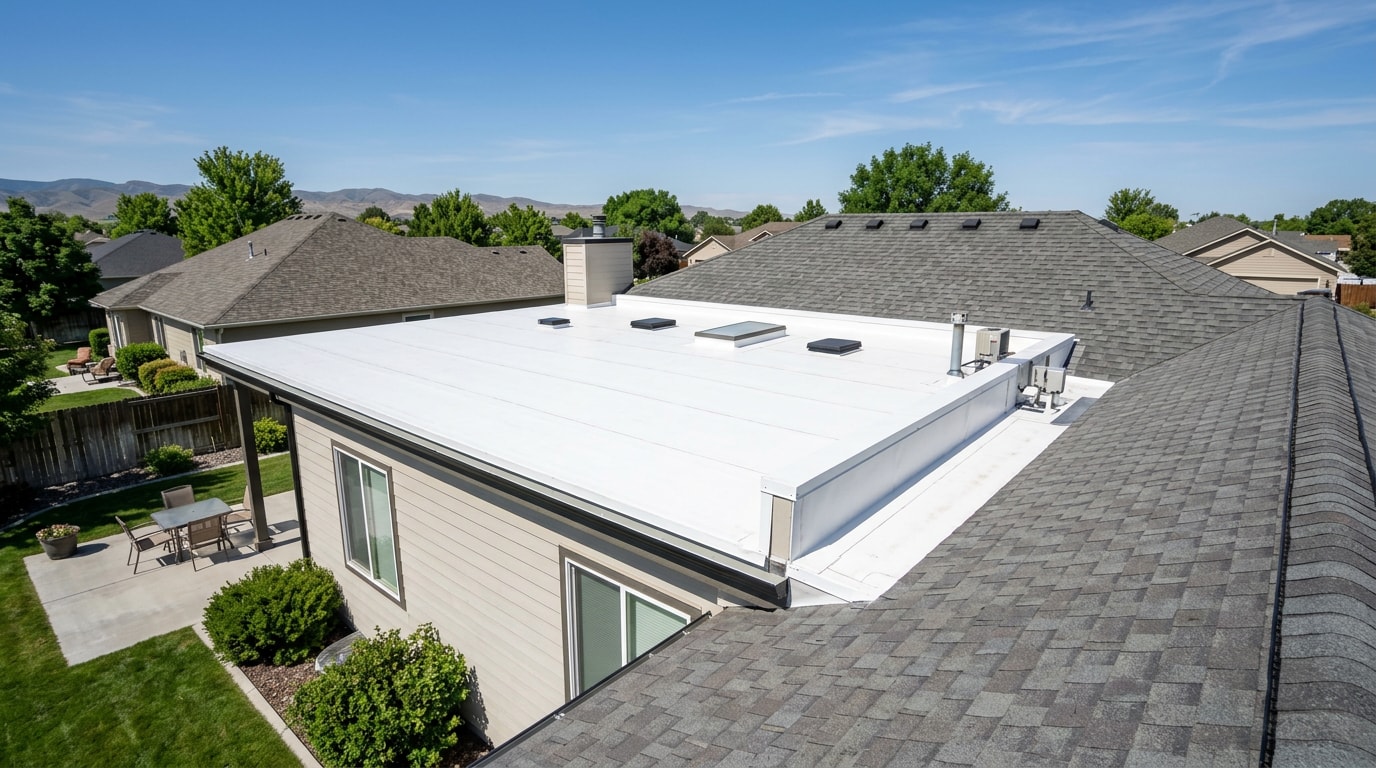
Vinyl roofing in Nampa, ID almost always means one specific product: heat-welded PVC membrane installed on flat or low-slope roof sections, not the vinyl siding homeowners sometimes confuse it with. Our crews have installed and patched PVC membrane on everything from garage additions to commercial strip-mall roofs across the Treasure Valley, and the material performs very differently depending on how it's detailed. Here's what it actually costs, how long it lasts, and how to know if it's the right call for your roof.
What Is Vinyl (PVC) Roofing, Exactly?
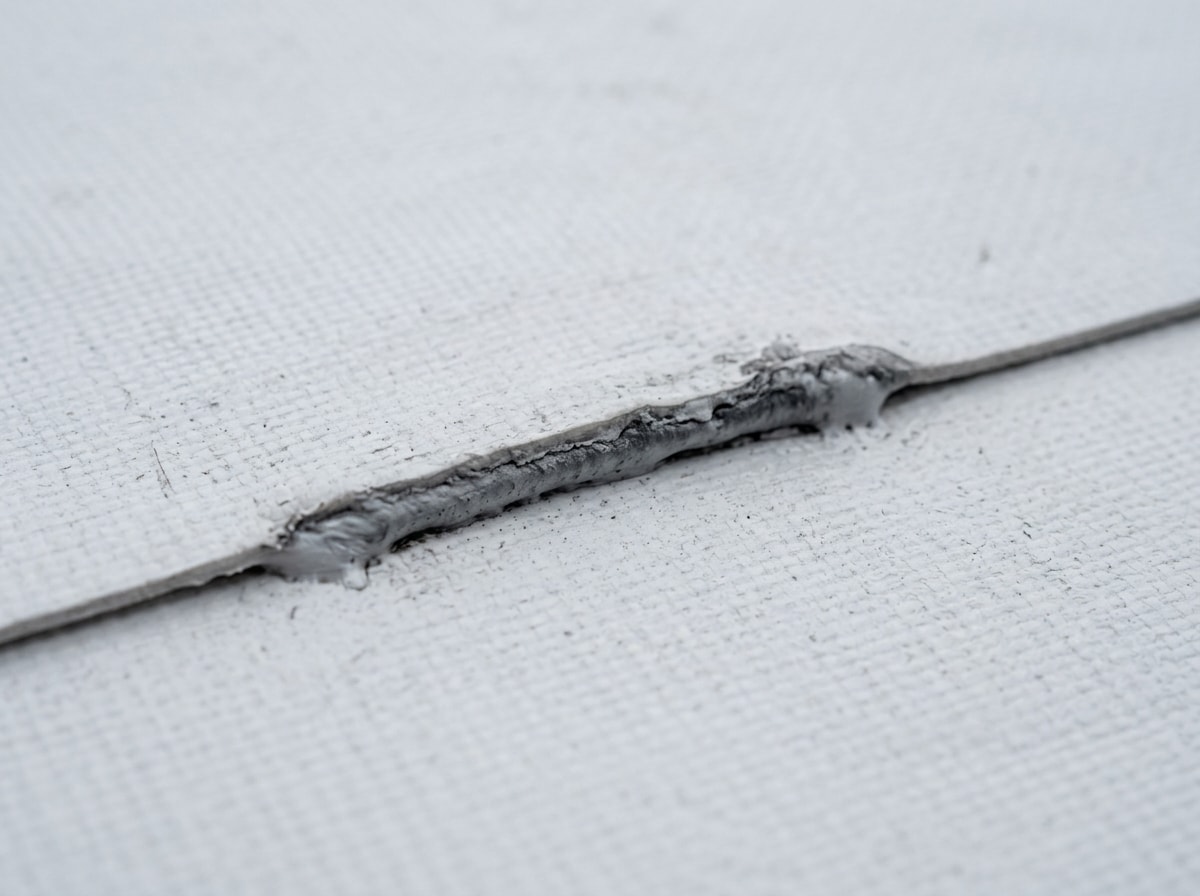
PVC roofing is a single-ply membrane made from reinforced polyvinyl chloride sheets that get heat-welded together at the seams, creating one continuous, watertight surface instead of overlapping shingles or panels. That welding process is what separates it from glued or taped single-ply products.
Industry standard ASTM D4434 governs the material. Under ASTM D4434, the ASTM International PVC roofing standard, PVC membranes must have a reinforced scrim. That scrim is what keeps the sheet from stretching or tearing once it's exposed to Idaho's temperature swings and UV load year after year.
PVC also comes in different thickness classes depending on how it's reinforced and where it will be installed. Heavier membranes generally hold up better on roofs with more foot traffic, like commercial units with rooftop HVAC access.
Vinyl Roofing Cost in Nampa, ID
PVC membrane costs more per square foot to install than asphalt shingles, mainly because of the heat-welding labor and the fact that it's a commercial-grade material even when used on residential flat-roof additions. It generally lands in a similar or slightly higher range than other single-ply options like EPDM rubber or TPO, since seam welding takes longer than rolling and taping a membrane.
Total project cost depends on:
- Square footage of the flat or low-slope section being covered
- Roof complexity, including drains, curbs, skylights, and penetrations that each need a welded detail
- Membrane thickness and reinforcement type chosen for the application
- Tear-off requirements if an old membrane or built-up roof has to come out first
- Access, since steep pitches near the flat section or multi-story commercial buildings add labor time
Because pricing swings so much with roof shape and access, a site-specific measurement is the only reliable way to get an accurate number. Request a free estimate and we'll walk the roof and give you a written breakdown before anything is scheduled.
How Long Does a PVC Roof Last?
A properly installed PVC membrane typically lasts 20 to 30 years, assuming the seams were welded correctly and the roof gets basic periodic maintenance. Lifespan depends heavily on membrane thickness, how much UV and foot traffic the roof sees, and whether perimeter terminations were detailed well at installation.
One of the most reflective properties of PVC is also one of its biggest durability advantages. Owners of large commercial, industrial and multi-family residential buildings are turning to white reflective PVC roofing membranes to reduce peak energy demand by as much as 10 percent and control energy costs. That reflectivity isn't just an energy-bill perk. It also means the membrane runs cooler, which slows down the UV degradation that eventually causes single-ply membranes to crack or shrink.
ENERGY STAR sets a specific bar for how reflective a low-slope roof product has to be to qualify as a cool roof. Low-slope roof products must have an initial solar reflectance greater than or equal to 0.65 and must maintain solar reflectance greater than or equal to 0.50 three years after installation under normal conditions. White PVC membranes typically meet or beat that threshold out of the box, which is part of why they show up so often on commercial flat roofs in hot-summer climates like the Treasure Valley.
In our own service calls, the most common PVC failure point isn't the membrane field itself. It's the perimeter termination bar and pipe boot flashing coming loose after repeated freeze-thaw cycles each Nampa winter. That's a repair, not a reroof, if it's caught early.
Vinyl (PVC) vs. Other Roofing Materials Used in Nampa
| Material | Best For | Typical Lifespan | Notes |
|---|---|---|---|
| PVC (vinyl) membrane | Flat & low-slope sections | 20 to 30 years | Heat-welded seams, highly reflective, resists chemicals and grease |
| EPDM rubber | Flat & low-slope sections | 15 to 25 years | Lower material cost, glued or taped seams instead of welded |
| Asphalt shingles | Standard-pitch residential roofs | 20 to 25 years | Most affordable, widest style selection |
| Standing seam metal | Pitched residential & commercial | 40 to 60 years | Custom-fabricated panels, low maintenance |
| Clay/concrete tile | Pitched, structurally rated roofs | 50+ years | Heavy, needs reinforced roof structure |
If you're weighing PVC against another single-ply membrane, our EPDM buyer's guide for Nampa breaks down how rubber roofing compares on cost and seam durability.
How Vinyl Roofing Installation Works
A PVC reroof or new installation generally follows the same sequence regardless of whether it's a residential sunroom addition or a commercial building:
- Roof inspection and measurement to confirm deck condition, drainage slope, and square footage.
- Tear-off (if needed) of the failing membrane, insulation check, and deck repair where moisture has gotten in.
- Insulation and cover board installation to create a flat, stable substrate for the membrane.
- Membrane rollout, positioning sheets to minimize seams around drains, curbs, and penetrations.
- Heat welding the seams with automated or hand-held welding equipment, then probing every seam to confirm a full weld.
- Perimeter and flashing detail work at parapets, walls, and penetrations, which is where most future leaks originate if rushed.
- Final walkthrough confirming drainage, seam integrity, and site cleanup.
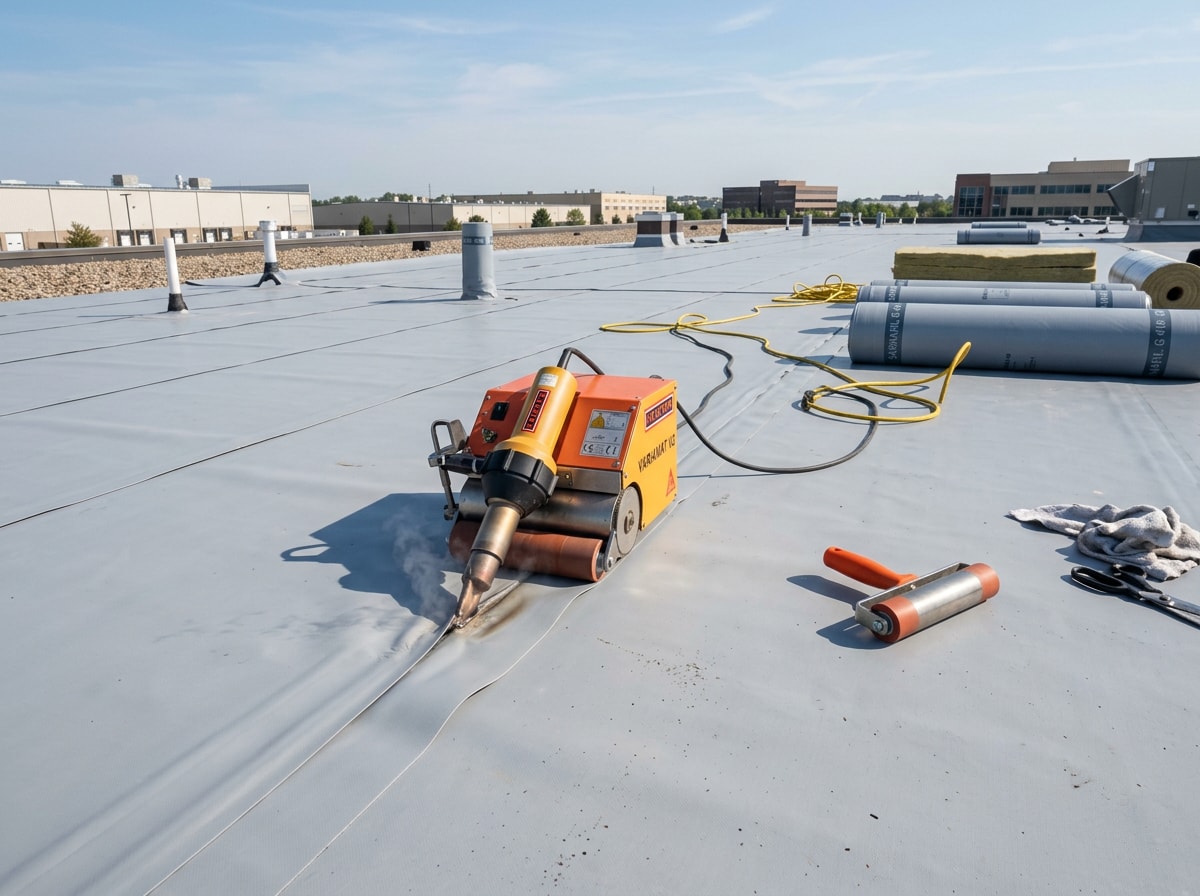
For a full breakdown of what our crews cover start to finish, see our roof installation services and roof replacement services pages.
When Vinyl Roofing Makes Sense in Nampa
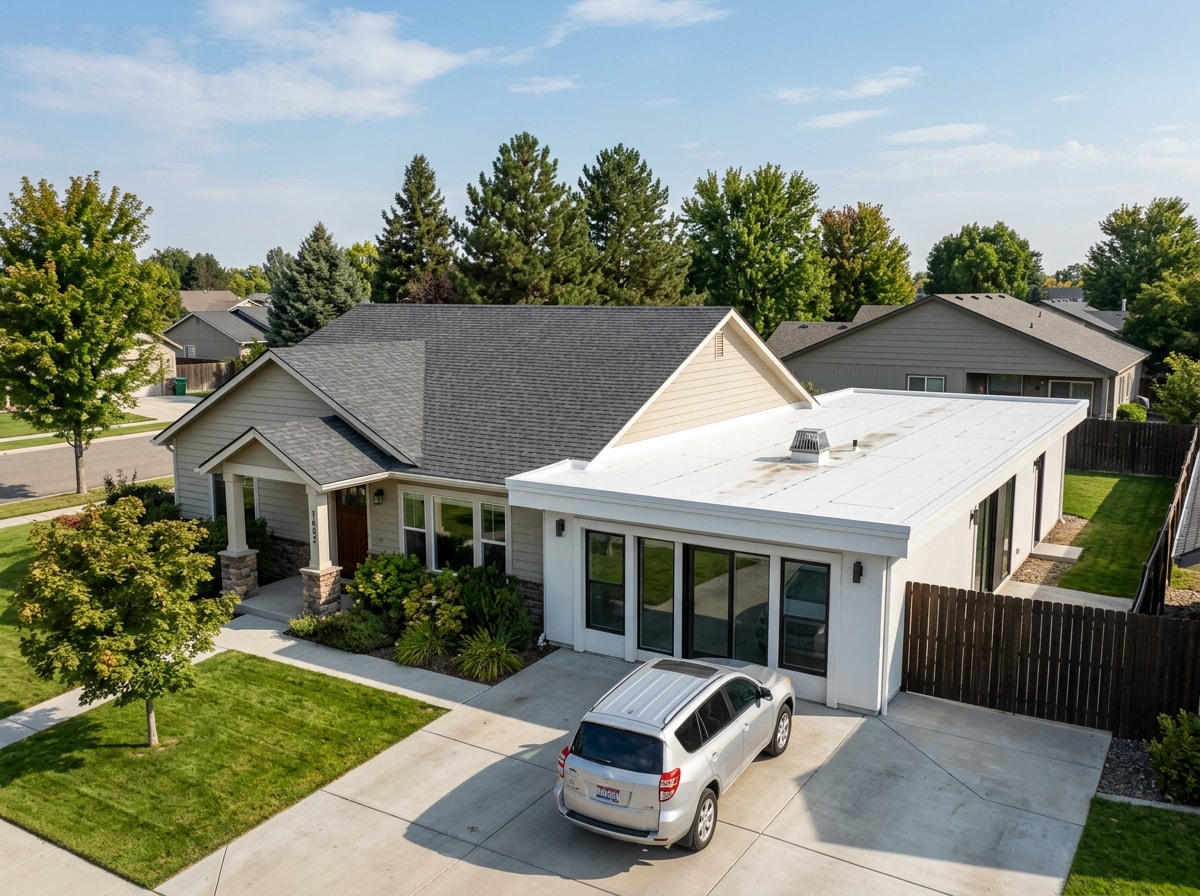
PVC membrane earns its cost on roofs with little to no pitch, where shingles or metal panels can't shed water reliably. That includes garage and sunroom additions tied into a pitched main roof, flat commercial roof sections, and low-slope porch or patio covers.
It's generally not the right call on a standard-pitch residential roof where asphalt, metal, or tile will outperform it on cost per square foot. A roof inspection can confirm which category your roof falls into before you commit to a material.
Repairing or Replacing a Damaged PVC Roof
Most PVC membrane damage shows up as a lifted seam, a punctured field section from dropped tools or debris, or flashing separation at a parapet wall. Because the material is thermoplastic, small punctures can often be patched by welding a new piece of membrane over the damaged area rather than replacing the whole roof.
Storm-related damage is a different conversation, especially after wind events strong enough to lift membrane edges or hail that can bruise softer flashing materials. About one in 35 insured homes has a property damage claim related to wind or hail each year. If that's your situation, our storm damage repair team documents the damage with photos and measurements and meets the adjuster on-site, since having the insurance adjuster inspect the damage is a standard step insurers expect before approving a claim.
Choosing a Nampa Vinyl Roofing Contractor
A few checks before signing a contract:
- Licensing and insurance that's current, not expired or pending renewal
- Manufacturer training specific to PVC welding, since a bad weld is the single most common cause of early membrane failure
- A written scope of work detailing membrane thickness, insulation type, and flashing details before crews show up
- Both a manufacturer material warranty and a separate workmanship warranty in writing, since they cover different kinds of failures
Bullseye Exteriors handles PVC membrane installation, repair, and replacement across Nampa and the surrounding Treasure Valley, alongside our broader roofing contractor services.
Service Areas Near Nampa
Beyond Nampa itself, our crews regularly cover flat and low-slope roofing work in Boise, ID, Meridian, ID, Caldwell, ID, and Kuna, ID. If you're near the Nampa border, it's worth confirming your contractor already knows the local permitting process rather than learning it on your job.
FAQ
What is vinyl roofing made of?
Vinyl roofing is a reinforced PVC (polyvinyl chloride) sheet membrane. The sheets are heat-welded together at the seams rather than glued, which creates a continuous, watertight surface across flat or low-slope roof sections.
Is vinyl roofing the same as vinyl siding?
No. Vinyl siding is a rigid exterior wall cladding product. Vinyl roofing is a flexible PVC membrane designed for horizontal or low-slope roof surfaces. They share a base material but are engineered for completely different applications and aren't interchangeable.
How much does PVC/vinyl roofing cost in Nampa, Idaho?
It costs more per square foot than asphalt shingles and is generally priced similarly to or slightly above other single-ply membranes like EPDM, due to the labor involved in heat-welding seams. Exact pricing depends on square footage, roof complexity, and membrane thickness, so a site-specific quote is the only accurate way to know your number.
What is the lifespan of a PVC roof?
A well-installed PVC membrane typically lasts 20 to 30 years. Actual lifespan depends on membrane thickness, UV exposure, and whether the seams were fully welded during installation.
Can a vinyl roof be repaired, or does it need full replacement?
Most localized damage, like a lifted seam or a small puncture, can be welded and patched rather than requiring a full tear-off. Full replacement typically comes into play when multiple seams are failing, the membrane has widespread UV degradation, or the insulation beneath it has taken on water.
Do you offer financing for vinyl roofing projects?
Financing is available for larger roofing projects through third-party lending partners with fixed monthly payment terms. Approval requirements and terms vary by lender, so it's worth asking about financing options when you schedule your estimate.
Is PVC roofing a good fit for Idaho's climate?
Yes, for the roof sections it's designed for. Its high solar reflectance helps during hot Treasure Valley summers, and properly welded seams hold up well through freeze-thaw winters. It's not a substitute for pitched-roof materials on a standard sloped residential roof.
If you need other roofing or exterior work alongside a flat-roof vinyl membrane project, from siding repair to window replacement, our team can scope the whole project in one visit. Get a free estimate to start.