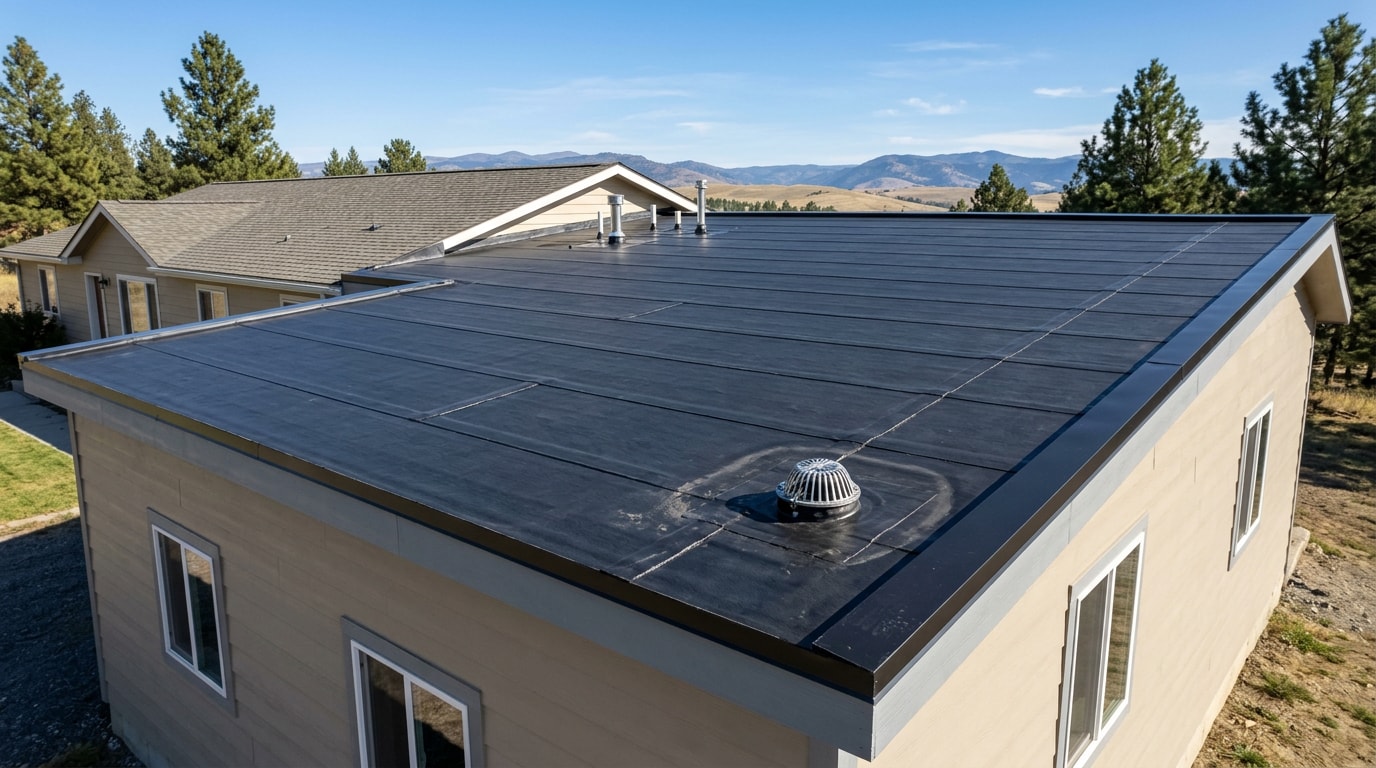
Rubber roofing in Nampa, ID almost always means EPDM, the synthetic rubber membrane that dominates flat and low-slope roofs across the Treasure Valley. This guide covers real 2026 pricing, how EPDM holds up against Nampa's freeze-thaw winters and dry summers, and what separates a roof that lasts 30 years from one that fails at 12. We've patched enough EPDM seams on local garages, warehouse additions, and flat-roof sections of homes to know exactly where these roofs give out first.
What Is EPDM Rubber Roofing?
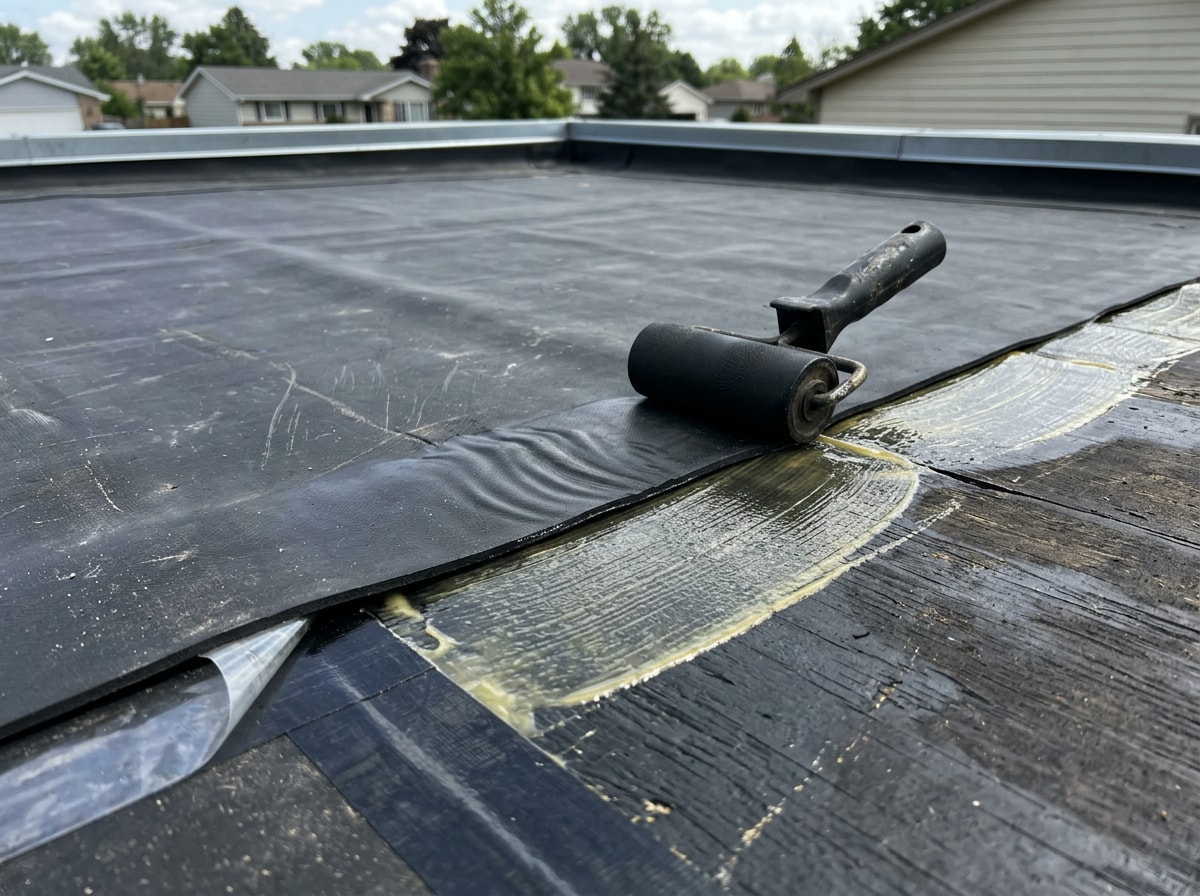
EPDM stands for ethylene propylene diene monomer, but most property owners just call it rubber roofing. It's a single-ply membrane that ships in large flexible sheets and gets installed one of three ways.
- Fully adhered with bonding adhesive across the whole deck
- Mechanically fastened with plates and screws along the seams
- Ballasted with stone or pavers, which holds the membrane down without penetrating the deck
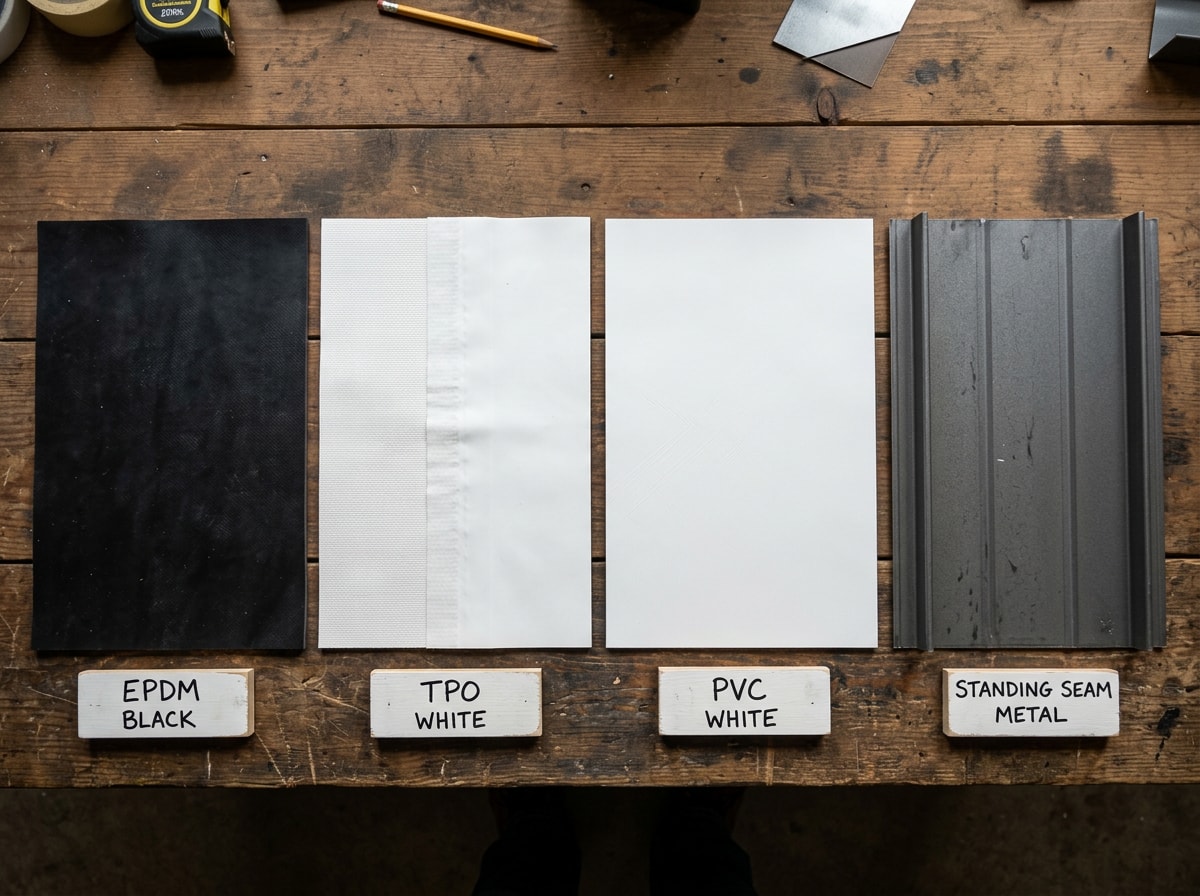
This flexibility is why rubber roofing shows up so often on low-slope roofs: garages, additions, outbuildings, and flat sections of commercial buildings. It resists UV damage, stays pliable in cold weather, and doesn't crack the way rigid materials can after repeated freeze-thaw cycles. Properties with larger flat-roof systems, like warehouses and retail strips, typically choose between EPDM, TPO, and PVC. You can compare full system options on our roofing contractor services page.
Rubber Roofing Cost in Nampa, ID: 2026 Pricing
EPDM's installation process is simpler than heat-welded systems like TPO or PVC, which is part of why it usually prices lower per square foot. But sticker price only tells half the story. Total cost of ownership, meaning install price plus repairs and how many years you get before replacement, is what actually determines value.
The table below is a planning reference, not a quote. Actual pricing depends on roof size, deck access, existing insulation, and current material markets.
| System | Installed Cost (per sq ft, 2026 est.) | Typical Lifespan | Best For | Watch-Outs |
|---|---|---|---|---|
| EPDM | $4.50-$8.00 | 20-30 years, longer with maintenance | Low-slope roofs, cold climates | Black surface absorbs heat unless coated |
| TPO | $5.50-$9.00 | 15-25 years | Reflective/energy-code projects | Seam quality varies by installer |
| PVC | $6.50-$10.50 | 20-30 years | Chemical or grease exposure | Higher material cost |
| Metal | $8.00-$14.00 | 40-60 years | Steep or low-slope hybrid | Higher install complexity |
EPDM has a longer field track record than any other single-ply membrane. A longevity review published by the EPDM Roofing Association points to many EPDM installations exceeding 40 years of exposure in the field under various climatic conditions, with none of the tested material showing alarming signs of degradation , and some aged membrane studied has shown a potential life expectancy of 50 years . That track record is exactly why EPDM remains the default for flat-roof retrofits here, not just new builds. If your current roof is closer to the end of that curve, our roof replacement page walks through what a full tear-off and re-cover actually involves.
How EPDM Performs in Nampa's Climate
Nampa swings between hot, dry summers and freeze-thaw winters, and EPDM's flexibility lets it expand and contract across that range without cracking the way some rigid membranes do. That resilience matters most on flat and low-slope roofs, where drainage design, not membrane quality alone, determines how long the system actually lasts.
Ponding water is the recurring risk on low-slope roofs in this region. Building codes exist specifically because standing water is a structural, not cosmetic, problem. Where roof drains are required, secondary emergency overflow roof drains or scuppers must be provided where the roof perimeter construction extends above the roof in a way that would trap water if the primary drains clog , per the International Plumbing Code's storm drainage requirements. A properly sloped, properly drained EPDM roof sheds that risk; a flat one with clogged scuppers doesn't.
Wind and hail are the other seasonal threat, especially on ballasted systems where loose stone can shift. If a storm has already lifted seams or punctured the membrane, our storm damage repair team handles emergency patching before a small puncture turns into deck rot.
Common EPDM Problems and Maintenance in Nampa
EPDM roofs tend to fail at the same handful of points, year after year.
- Seam separation, usually at laps where adhesive has aged out
- Punctures from foot traffic, dropped tools, or storm debris
- Ponding areas where the membrane has settled or drainage was never corrected
- Flashing failures at parapet walls, vents, and rooftop penetrations
On the ballasted and fully adhered EPDM roofs we've serviced across Nampa and Caldwell, from garage conversions off Karcher Road to flat sections on older downtown buildings, the membrane itself rarely fails first. Flashing details and clogged drains cause most of the service calls. Standing water isn't just cosmetic either; it adds real structural weight over time and accelerates membrane breakdown at the exact spots where it collects.
A twice-yearly inspection, spring and fall, catches most of this before it becomes a leak. Our roof inspection service checks seams, flashing, and drainage on every visit, and our roof repair service handles patching and re-sealing before small issues spread. If a coating is on the table to extend membrane life and cut cooling costs, our roof coating guide for Twin Falls) breaks down how that process works and what it costs.
How to Choose a Qualified EPDM Roofing Contractor in Nampa, ID
Not every roofing crew has real EPDM experience, and the membrane punishes sloppy installs faster than asphalt shingles do. Before signing anything, confirm:
- Manufacturer-authorized installer status for the specific EPDM product being used
- Warranty terms, ideally a no-dollar-limit warranty that covers labor, not just material
- Active state licensing and insurance, verifiable through Idaho's contractor registry
- A real portfolio of completed EPDM projects, not just shingle work with EPDM listed as a side service
A contractor backed by manufacturer certification is far more likely to install a roof that actually holds up to its warranty terms over the next 20-plus years. Our team works throughout Nampa and the surrounding Treasure Valley, and we're straightforward about which systems make sense for which buildings. Get a free estimate before your current roof forces an emergency decision.
This guide was put together by the roofing crew at Bullseye Exteriors ID, licensed and insured contractors who install and repair EPDM, TPO, and shingle roofing across Nampa, Caldwell, and Meridian. Questions about a specific roof? Reach us through our contact page.
FAQ
How much does rubber roofing cost in Nampa, ID?
Expect roughly $4.50 to $8.00 per square foot installed for EPDM in 2026, depending on roof size, access, and insulation needs. That's a planning range, not a quote; get a site-specific estimate before budgeting a project.
How long does EPDM rubber roofing last?
A properly installed, well-maintained EPDM roof typically runs 20 to 30 years, with some field-verified installations lasting 40 to 50 years according to EPDM Roofing Association studies. Maintenance discipline, especially drainage and flashing checks, drives most of that variation.
Is EPDM roofing only for commercial buildings, or does it work on houses too?
EPDM works on any low-slope or flat section of a roof, which is why it shows up on home additions, garages, and porch roofs just as often as on commercial flat roofs. It isn't used on standard pitched asphalt-shingle roof sections.
What are the downsides of rubber roofing?
The black surface absorbs heat unless it's coated or ballasted, seam quality depends heavily on installer skill, and punctures need prompt patching to avoid water intrusion. None of these are dealbreakers, but they're reasons to hire an experienced EPDM installer rather than a generalist.
How often should a rubber roof be inspected in Nampa?
Twice a year, spring and fall, is a practical cadence. That schedule catches seasonal wear, clogged drains, and flashing issues before they turn into leaks.
Can a rubber roof be repaired instead of replaced?
Most EPDM problems, like seam separation or isolated punctures, are repairable if caught early. Full replacement usually only becomes necessary once the membrane is widely brittle, chronically ponding, or past its expected service life.