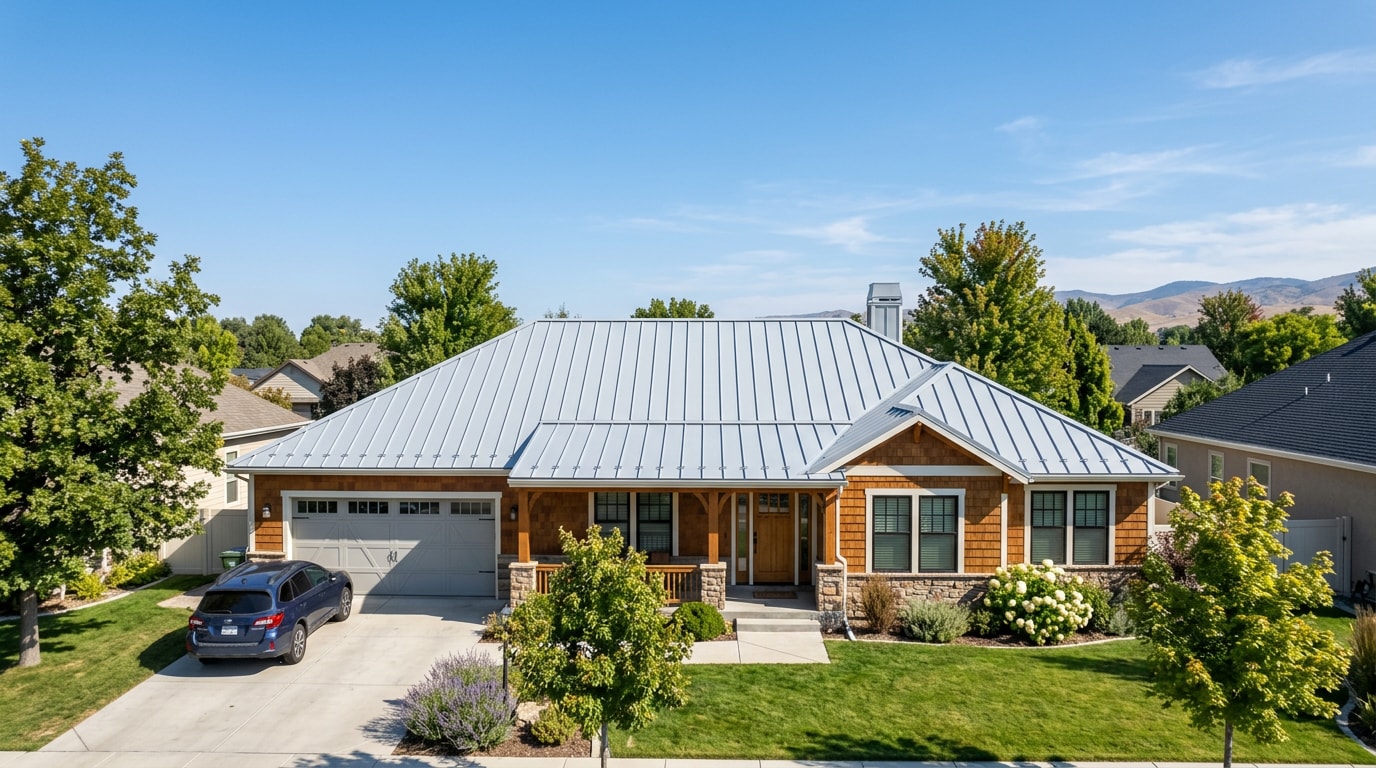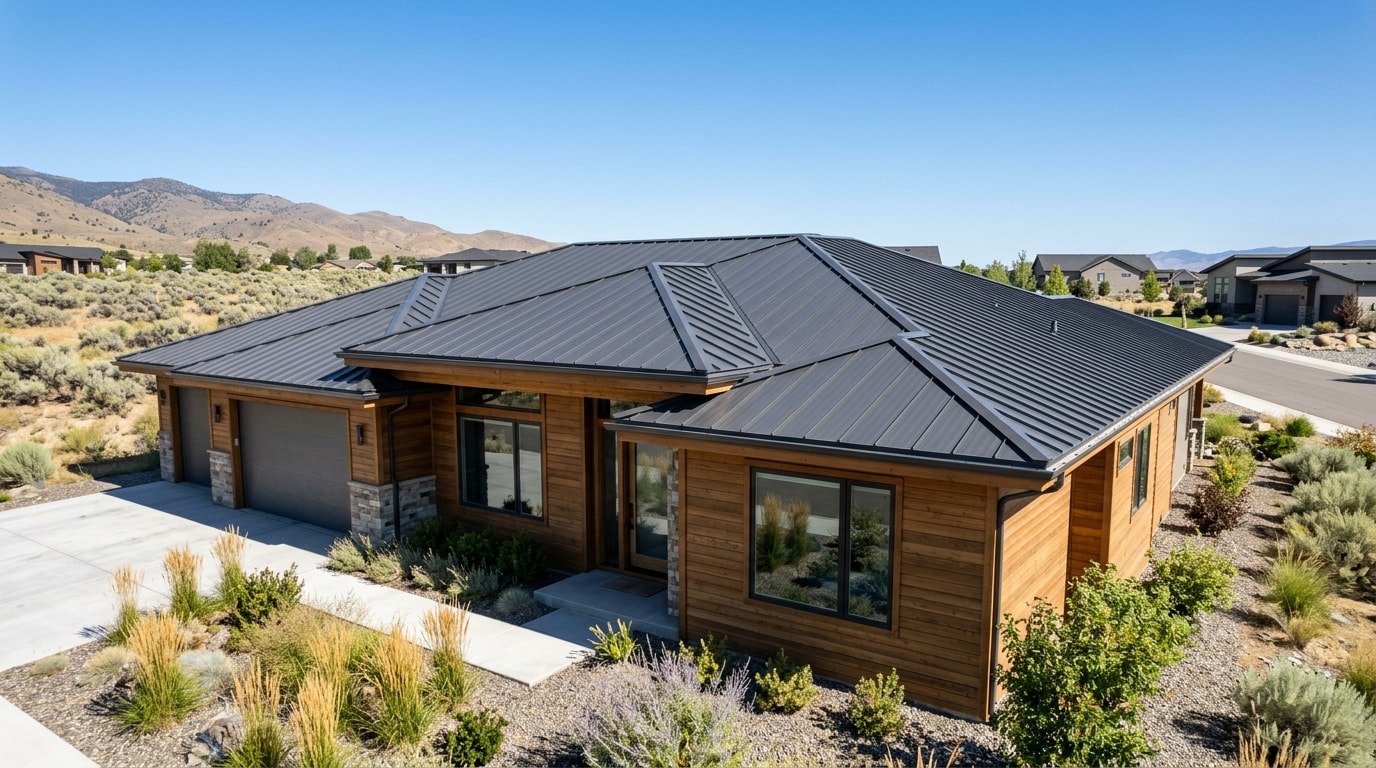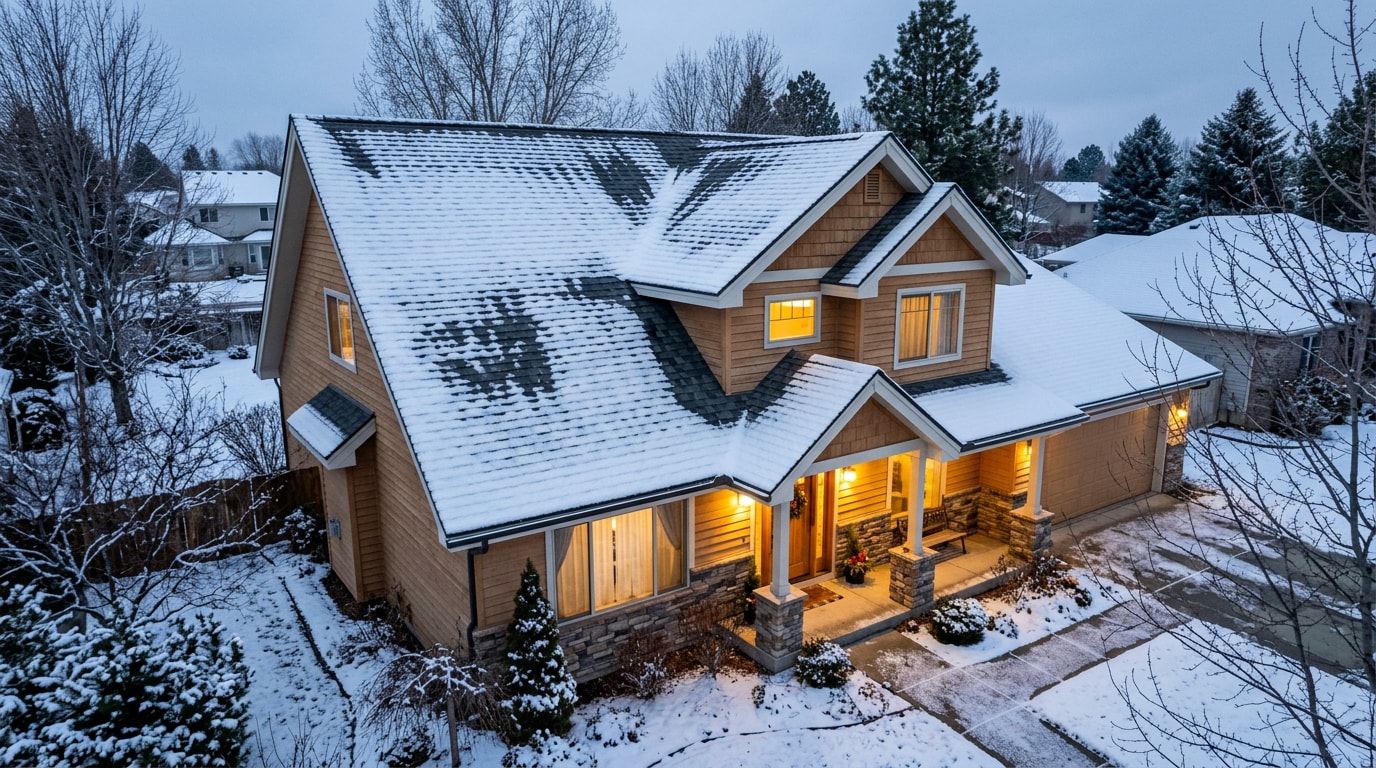
Roofing insulation in Caldwell, ID is the difference between a roof that sheds Treasure Valley's freeze-thaw swings and one that grows ice dams every January. Most attics we inspect in older Caldwell neighborhoods were insulated to a standard that no longer matches current energy code targets. This guide breaks down the material options, the R-values your home actually needs, and the warning signs that it's time to upgrade.
Why Caldwell's Climate Demands the Right Roofing Insulation
Canyon County sits in a climate zone where attic performance matters more than most homeowners realize. Zone 5 includes Canyon and a long list of other Idaho counties, with a ceiling R-value of 49 recommended as a baseline. That number isn't arbitrary. It reflects the real swing between sunny afternoons and overnight freezes that defines a Caldwell winter.
When a roof deck runs warmer than it should, snow melts unevenly, refreezes at the eaves, and forces water back under the shingles. Under-insulated attics are the most common cause. If storm season has already left you dealing with water intrusion, our storm damage repair team can assess whether insulation or roofing damage is the root cause.
Recommended R-Values for Caldwell, ID Attics
R-value measures how well a material resists heat flow, and higher numbers mean better performance. For Caldwell's climate zone, the federal guidance is clear and the Idaho state energy program backs it up.
For retrofitting existing wood-framed homes in Zones 6, 5, and 4C, the recommended attic insulation level is R-60 if the attic is uninsulated, or up to R-49 if it already has 3 to 4 inches of existing material.
Most of Idaho falls within Climate Zones 5 or 6, which is why Caldwell projects should be scoped against the colder end of that range rather than a national average.
A few practical notes on hitting that target:
- Uninsulated or near-empty attic: aim for R-60.
- Existing 3-4 inches of old batt or loose-fill: topping off to R-49 is typically the cost-effective floor, not the ceiling.
- Floors over unheated garages or crawl spaces: budget for R-30.
Ask any installer quoting your project which standard they're using. A bid that targets R-38 in a Caldwell attic is quoting well below what current guidance recommends.
Insulation Material Options for Caldwell Roofs and Attics
Most Caldwell insulation projects fall into one of three material categories, each suited to different parts of the house.
- Blown-in (loose-fill) fiberglass or cellulose: Installed with specialized equipment that distributes material evenly across the attic floor. It fills small gaps around joists and wiring and layers well over existing insulation, which makes it the most common choice for topping off an older Caldwell attic.
- Spray foam: Expands on contact to create an air seal in addition to thermal resistance.
Spray foam delivers roughly 6 R-value per inch and acts as both insulation and an air barrier, while rigid foam boards offer up to 7.5 per inch and are commonly used in basements, crawl spaces, and under siding. It's the stronger option for rim joists, crawlspaces, and hard-to-reach cavities where air leakage is the real problem, not just heat loss.
- Rigid foam board: Dense, high R-value per inch, often used above roof decks, in walls, or at foundations where thickness is limited but performance can't be.
These materials cover attics and roofs, walls, basements, crawl spaces, floors, and garages, so the right choice usually depends on which assembly you're insulating, not a single "best" product across the whole house. If ventilation at the eaves is also compromised, it's worth pairing an insulation upgrade with a look at your soffit and fascia, since blocked soffit vents can undo the benefit of fresh attic insulation.

Blown-In vs. Spray Foam Insulation: Which Fits Your Attic?
Blown-in insulation suits attic floors and cost-effective top-offs, while spray foam earns its higher price tag at rim joists and in tight, leak-prone cavities.
| Factor | Blown-In | Spray Foam |
|---|---|---|
| R-value per inch |
~2.2 (fiberglass) to 3.7 (cellulose)
|
~6.0 (closed-cell)
| Best use | Attic floors, topping off existing insulation | Air sealing, rim joists, crawlspaces |
| Air barrier | No (fiberglass) / partial (cellulose) | Yes |
| Typical lifespan | 20-25 years | 25+ years |
Actual installed cost varies by attic size, access, and current insulation depth, so get a measured quote rather than pricing off a generic per-square-foot average.
How Attic Insulation Prevents Ice Dams and Roof Damage
Picture a typical Treasure Valley freeze-thaw week: daytime sun warms the roof surface enough to melt snow, then overnight temperatures drop and that meltwater refreezes at the eaves. Repeat that cycle a few times and you get an ice dam that backs water up under the shingles.
In climate zones 5 and greater, building science research recommends R-60 or more under this type of roof assembly specifically to control that cycle. Insulation alone isn't the whole fix. Air sealing at the ceiling plane and proper soffit-to-ridge ventilation both matter, which is why a thorough roof inspection should check attic conditions, not just shingles.
If ice dams have already caused leaks, sagging decking, or stained ceilings, roof repair addresses the damage, but it won't prevent a repeat unless the insulation gap gets fixed at the same time.
Signs Your Caldwell Attic Needs an Insulation Upgrade
Most insulation problems show up as symptoms elsewhere in the house before anyone climbs into the attic to look. Watch for:
- Rising heating or cooling bills with no change in usage habits
- Noticeably uneven room temperatures from floor to floor
- Visible frost or dampness on the underside of the roof deck in winter
- Snow melting unevenly on the roof, or ice building up at the eaves
- Thin, compressed, or patchy insulation visible around the attic hatch
Many homes in Caldwell's older neighborhoods were insulated to the standards of their build decade, not current targets, which is why uneven snow melt and drafty upstairs rooms are such common calls for us. If you're also weighing roofing material upgrades alongside insulation, our guide to roll roofing in Caldwell covers another piece of that decision.

Get an Insulation and Roof Assessment in Caldwell
An attic rarely has just one issue. Thin insulation, blocked ventilation, and an aging roof deck often show up together, which is why it's worth having them checked as a system rather than one at a time. Visit our homepage to see the full range of roofing and exterior services we handle across the Treasure Valley, or reach out directly to get a free estimate on an insulation or roof inspection for your Caldwell home.
FAQ
How much does blown-in attic insulation cost in Caldwell, ID?
Cost depends on attic size, access, and target R-value. Expect pricing to scale with how much material is needed to go from your current depth to R-49 or R-60, which is why a measured on-site quote is more reliable than a flat per-square-foot number.
What R-value do I need for my attic in Caldwell?
If your attic is currently uninsulated, target R-60. If it already has 3 to 4 inches of insulation, topping off to R-49 is the standard recommendation for this climate zone.
Can blown-in insulation be added over existing insulation?
Yes. New blown-in material can almost always be layered over existing fiberglass, cellulose, or batt insulation to raise the total R-value, as long as the old material isn't wet or compressed beyond use.
Is spray foam worth the extra cost over blown-in insulation?
It depends on the problem you're solving. Spray foam earns its cost where air leakage is the main issue, like rim joists and irregular cavities. For a straightforward attic floor top-off, blown-in insulation usually delivers comparable performance for less money.
How do I know if my attic needs more insulation, versus a ventilation fix?
Frost on the underside of the roof deck or ice dams that keep returning even after adding insulation usually point to a ventilation or air-sealing gap, not just low R-value. A roof inspection that includes the attic is the fastest way to tell which problem you actually have.
How long does an attic insulation upgrade take?
Most residential attic insulation projects are completed in a single day, assuming the attic is accessible and doesn't require insulation removal first.