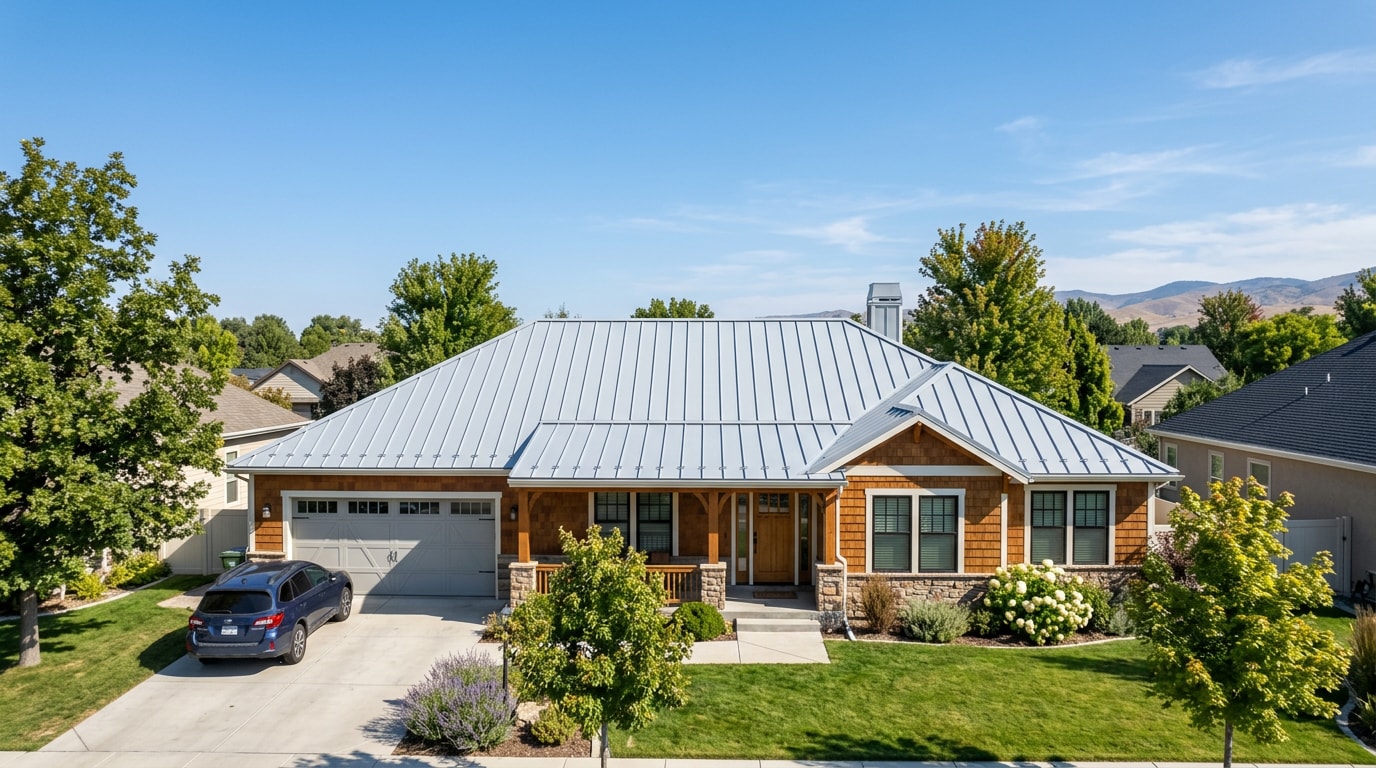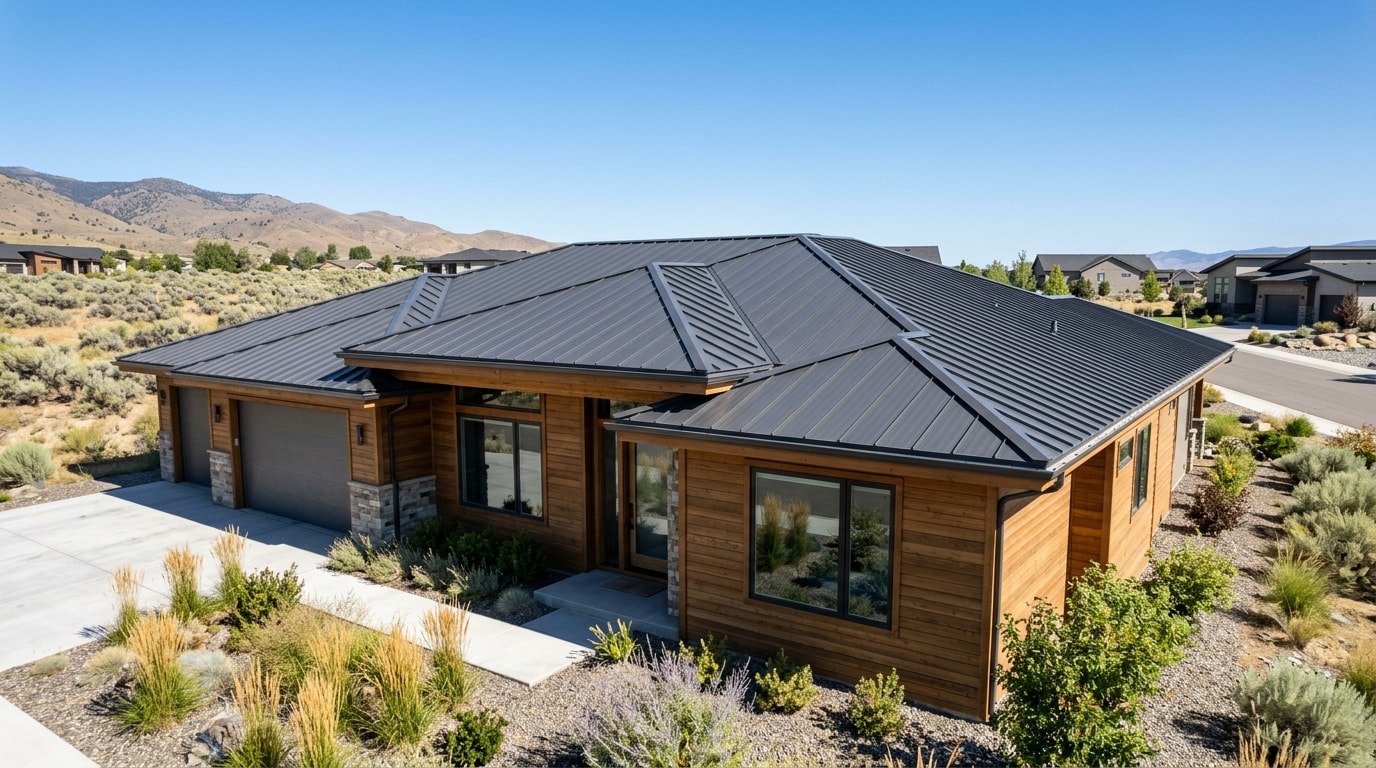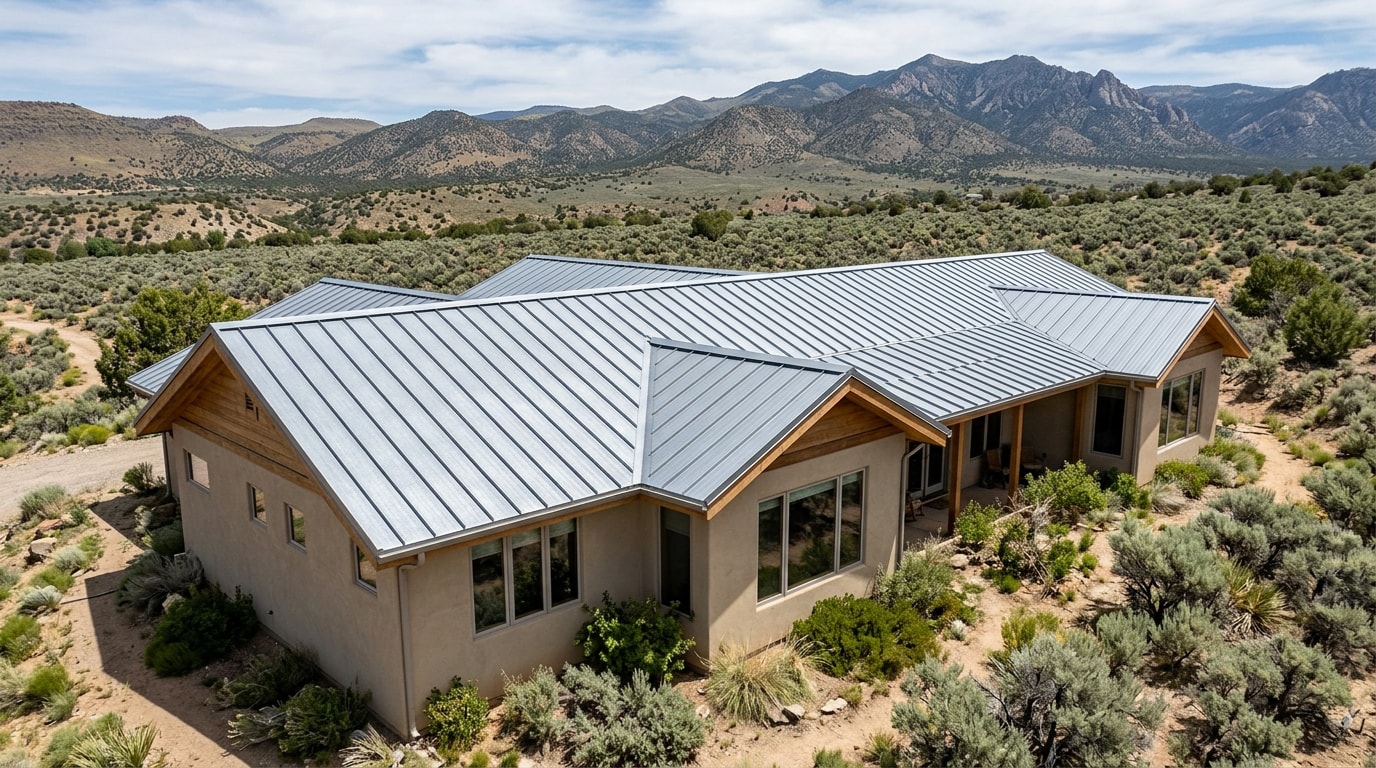
Galvalume metal roofing in Mountain Home, ID has to survive triple-digit summer heat, gusty high-desert wind, and heavy spring snow, sometimes in the same week. This guide breaks down what galvalume actually is, how it compares to galvanized steel, aluminum, and asphalt shingles, and why it's become the default roofing substrate for homeowners re-roofing in Elmore County. By the end, you'll know which panel profile and gauge fit your house, and what to ask any installer who quotes it.
Why Galvalume Metal Roofing Fits Mountain Home's Climate and Building Codes
Mountain Home sits at roughly 3,150 feet in Elmore County, where summer highs, winter wind, and the occasional heavy snow event all stress a roof differently than they would in Boise or the Snake River Plain.
Local building requirements reflect that. Elmore County's residential wind design standard calls for 115 MPH (IRC) wind speed for residential construction , while ground snow loads range from 30 pounds per square foot in most of the county up to 120 pounds in recreation and mountain areas, which require engineered design . A roof system here needs to hold up under both numbers, not just one.
Galvalume's standing seam profile sheds snow faster than shingles and its hidden-fastener design resists wind uplift better than most exposed-fastener systems, which is exactly the combination those two code numbers are pushing homeowners toward. The reflective surface also helps in the other direction, bouncing summer heat away from the attic instead of absorbing it.
Thinking about the investment? Get a Free Estimate and we'll walk you through gauge, profile, and cost options specific to your roof.
What Is Galvalume Metal Roofing?
Galvalume is steel sheet coated with an aluminum-zinc-silicon alloy that protects the base metal from rust and extends service life well beyond bare steel. It's the substrate behind most standing seam and corrugated metal panels sold in the United States today.
The coating works by combining two different kinds of protection:
- Aluminum provides long-term barrier protection against moisture and corrosion.
- Zinc provides sacrificial, self-healing protection at cut edges and scratches.
That combination is why galvalume became the industry default rather than a specialty option. If you're comparing panel systems, our roofing contractor team installs nearly every common profile on this same base material.
How Galvalume Is Made
Galvalume coating is applied through a continuous hot-dip process. The surface of low carbon cold rolled steel plate is hot-dip coated with an aluminum-zinc alloy consisting of 55% aluminum (Al) + 43.4% zinc (Zn) + 1.6% silicon (Si) .
That exact ratio isn't arbitrary. ASTM A792 specifies coating weight through designations such as AZ50 and AZ55, where the number signifies the minimum total coating weight on both sides of the sheet in hundredths of an ounce per square foot, with AZ55 specifying a minimum of 0.55 oz/ft² .
In plain terms, a panel stamped AZ50 is legally required to carry enough coating to perform as advertised, no matter who manufactured it. You can review the full ASTM A792 specification if you want the engineering detail behind the label.
Metal Roofing Options We Install
Galvalume describes the coating, not the panel shape. Profile, gauge, and finish are separate decisions layered on top of that base material, and two "galvalume roofs" can perform very differently depending on how those layers stack up.
Panel Profiles: Standing Seam vs. Corrugated and Exposed-Fastener
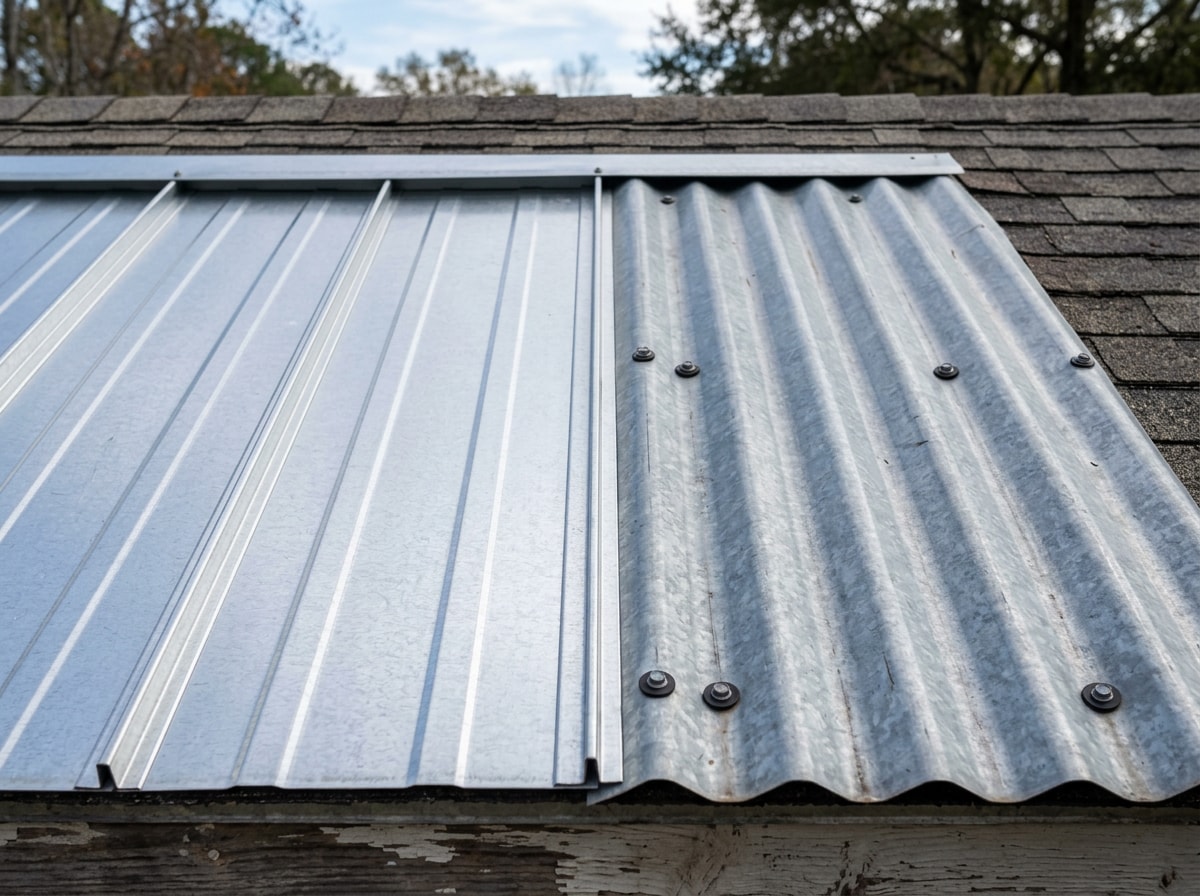
- Standing seam panels use concealed clips and raised, interlocking seams, so no fasteners penetrate the panel face. This gives better long-term weather tightness, though it costs more upfront.
- Corrugated and exposed-fastener panels screw directly through the panel into the deck or purlins. They cost less and install faster, but the screws and rubber washers need periodic inspection and eventual replacement.
See our roofing contractor services page for the full profile lineup we carry.
Thickness and Gauge
Gauge measures panel thickness, and lower numbers mean thicker steel. Here's how the common options generally break down:
| Gauge | Relative Thickness | Typical Use | Dent Resistance |
|---|---|---|---|
| 22 | Thickest common option | High-exposure or hail-prone roofs, commercial work | Highest |
| 24 | Mid-weight | Most residential standing seam jobs | High |
| 26 | Lighter | Budget-conscious residential, accent roofs | Moderate |
| 29 | Thinnest common option | Sheds, outbuildings, low-traffic sections | Lowest |
Thicker gauge costs more per square but resists hail and foot-traffic damage better, which matters given Elmore County's occasional severe spring storms. Lighter gauge can still perform fine on lower-slope or less exposed sections where budget matters more.
Galvalume Pros and Cons
Advantages:
- Strong corrosion resistance from the aluminum-zinc coating
- Long service life compared to bare or galvanized steel
- Lower cost than copper or specialty aluminum roofing
- Reflective surface that reduces attic heat gain
Tradeoffs:
- Possible oil canning, a cosmetic waviness in flat panel areas
- Galvanic corrosion risk if the panel contacts the wrong materials
- Fewer factory color choices than painted steel panels
On that second point, be specific about what to avoid. Galvalume is the wrong specification anywhere it will contact copper, lead, wet concrete, treated lumber, or salt spray, in those cases galvanized or painted galvalume is the right call instead . That's a detail worth raising with your installer before panels go on the roof, not after.
Mountain Home's low humidity actually works in galvalume's favor by slowing general corrosion. Agricultural dust and wide day-to-night temperature swings can still accelerate oil canning or fastener wear over time, so the tradeoffs aren't purely theoretical here.
Galvalume vs. Galvanized Steel vs. Aluminum
| Feature | Galvalume (AZ-Coated Steel) | Galvanized Steel (Zinc-Coated) | Aluminum |
|---|---|---|---|
| Coating/base | Aluminum-zinc-silicon alloy over steel | Pure zinc over steel | Solid aluminum, no steel base |
| Corrosion protection | Barrier protection plus sacrificial self-healing | Sacrificial protection only | Naturally corrosion resistant |
| Relative cost | Moderate | Generally lower | Generally higher |
| Watch out for | Contact with copper, lead, wet concrete, treated lumber, salt spray | Contact with dissimilar metals, acidic runoff | Softer metal, dents more easily than steel |
Galvanized steel still makes sense for exposed-fastener farm buildings or outbuildings where upfront cost matters more than squeezing out every extra year of coating life. For a primary residence in Mountain Home, galvalume's combination of protection and price is usually the better long-term call.
Metal Roofing vs. Asphalt Shingles
Asphalt costs less upfront, but it doesn't last as long. Unpainted galvalume has a lifespan up to 40 years, compared to traditional shingles, which typically have to be replaced every 15-20 years . Painted panel systems often extend that further; some manufacturers back their finishes with a 40-year limited paint warranty .
Run the math over a 40-year ownership horizon and most homes would need two shingle replacements in that span versus one metal roof. That often flips the cost comparison in metal's favor, even though the sticker price is higher on day one.
If you're still weighing your options or have an existing shingle roof that needs attention first, our asphalt roof repair guide for Mountain Home covers what to expect from that side of the comparison.
Fire Resistance and Wildfire Risk in Elmore County
Metal roofing is non-combustible, and roofing systems are classified on a tiered system from A to C according to UL 790 or ASTM E108 standards, with metal roofs, whether galvanized steel, aluminum, or copper, receiving the highest class rating, Class A .
That rating matters more here than it might in a wetter climate. Mountain Home sits surrounded by grass and sagebrush rangeland, and roof assemblies classified as Class A provide the greatest degree of fire resistance within a protection range, with some Class A assemblies using noncombustible coverings such as clay or concrete tiles and metal panels , according to FEMA's builder's guide for wildfire zones.
If grass fire exposure is a real concern on your property, a storm damage repair inspection can double as a chance to flag other hardening gaps, like open soffits or debris-prone valleys, while a crew is already on the roof.
Tips for Choosing Your Standing Seam Roof
- Match profile to exposure. Steeper, more wind-exposed roofs benefit most from standing seam's water and uplift performance.
- Weigh gauge against price honestly. If hail or heavy wind is a real risk on your property, paying more for 24 gauge over 29 gauge is usually worth it.
- Don't shop on sticker price alone. Factor in expected lifespan, maintenance needs, and how the roof performs through Mountain Home's mix of heat, wind, and snow before locking in a decision.
- Ask about the paint system. PVDF/Kynar-type finishes hold color longer under UV exposure than acrylic coatings.
Metal Roof Installation in Mountain Home, ID
A proper installation involves more than fastening panels down. It typically includes deck inspection or tear-off, underlayment, flashing at valleys and penetrations, ridge cap installation, and integration with your gutter system so water routes correctly off the new panels.
Our crews install and repair galvalume panel roofs throughout Mountain Home and the rest of Elmore County, and the most common callback we see isn't coating failure, it's loose exposed fasteners after a windy spring. That's a five-minute fix during a routine roof inspection if it's caught early.
Skipping or rushing any of these steps is where most metal roof problems start, regardless of how good the panels themselves are. Whether you need a full roof installation, a roof replacement, or just want a second opinion on a quote, visit our Mountain Home, ID service area page or get a free estimate and we'll walk the roof with you in person.
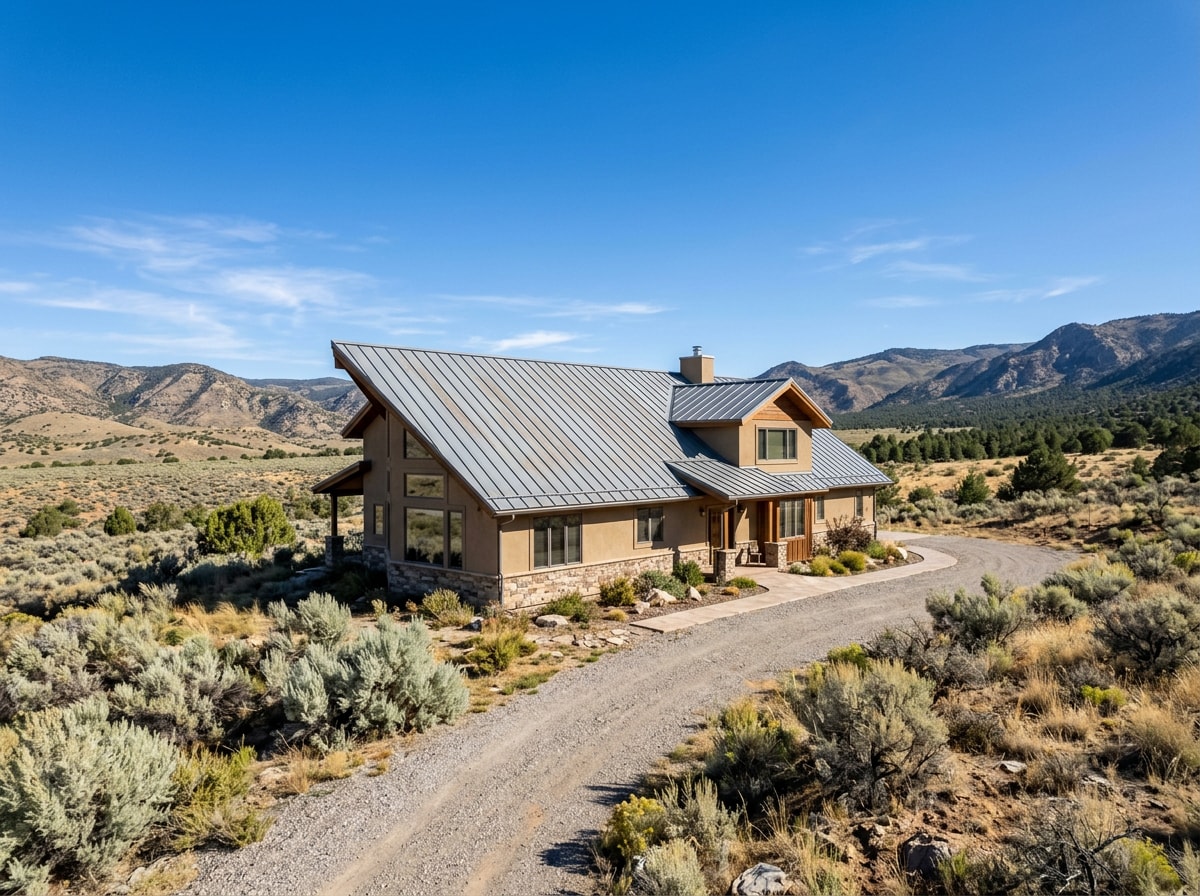
For homeowners anywhere in the Treasure Valley, you can also start from our homepage to see the full range of roofing, siding, and window services we offer.
FAQ
How much does a galvalume metal roof cost in Mountain Home, ID?
Cost depends on panel profile, gauge, roof pitch, and square footage, so there's no single number that applies to every home. Standing seam panels generally cost more than exposed-fastener corrugated panels of the same gauge, and thicker gauge steel adds cost per square. The most accurate way to get a number is a project-specific quote from a local installer.
Is galvalume roofing a good choice for Idaho winters and snow?
Yes. Standing seam galvalume's smooth, low-friction surface sheds snow faster than asphalt shingles, which reduces the ice and moisture load your roof deck carries through winter. Elmore County's building code also sets ground snow load requirements as high as 120 pounds per square foot in mountain and recreation areas, and metal roofing is commonly specified to meet that kind of load.
Can a metal roof be put on a modular home?
Yes, metal roofing can generally be installed on a modular home, provided the roof framing and attachment method are compatible with the panel system chosen. A qualified installer should verify the structure and existing roof deck before installation to confirm proper fastening and support.
What are the disadvantages of galvalume?
Galvalume's main drawbacks are oil canning, a cosmetic waviness that can appear in flat panel sections under temperature changes. It also carries galvanic corrosion risk if it contacts dissimilar metals like copper, and it offers fewer bare-metal color options than painted steel panels.
How do you tell what kind of metal roof you have?
Check the panel's finish and sheen first. Galvalume typically has a dull, spangled gray appearance, while painted steel shows a solid color coat. Panel markings, manufacturer stamps, or your original installation paperwork can also confirm the exact material and coating type used.
How much is a metal roof on a trailer?
Metal roofing for a mobile home or trailer is generally less expensive than a full residential roof due to smaller square footage, though exact pricing varies by panel type, gauge, and local labor rates. For an accurate number based on your specific trailer or mobile home, request a free quote from a local installer.