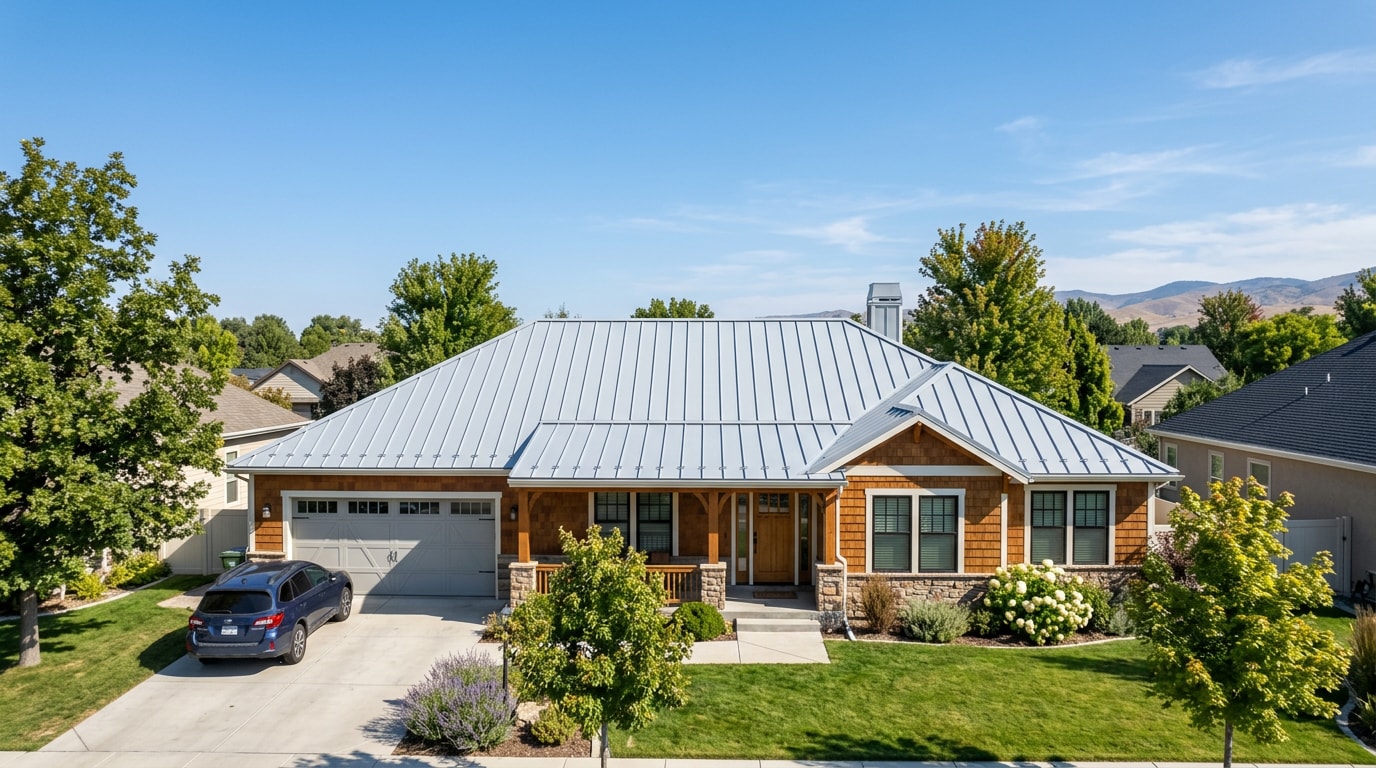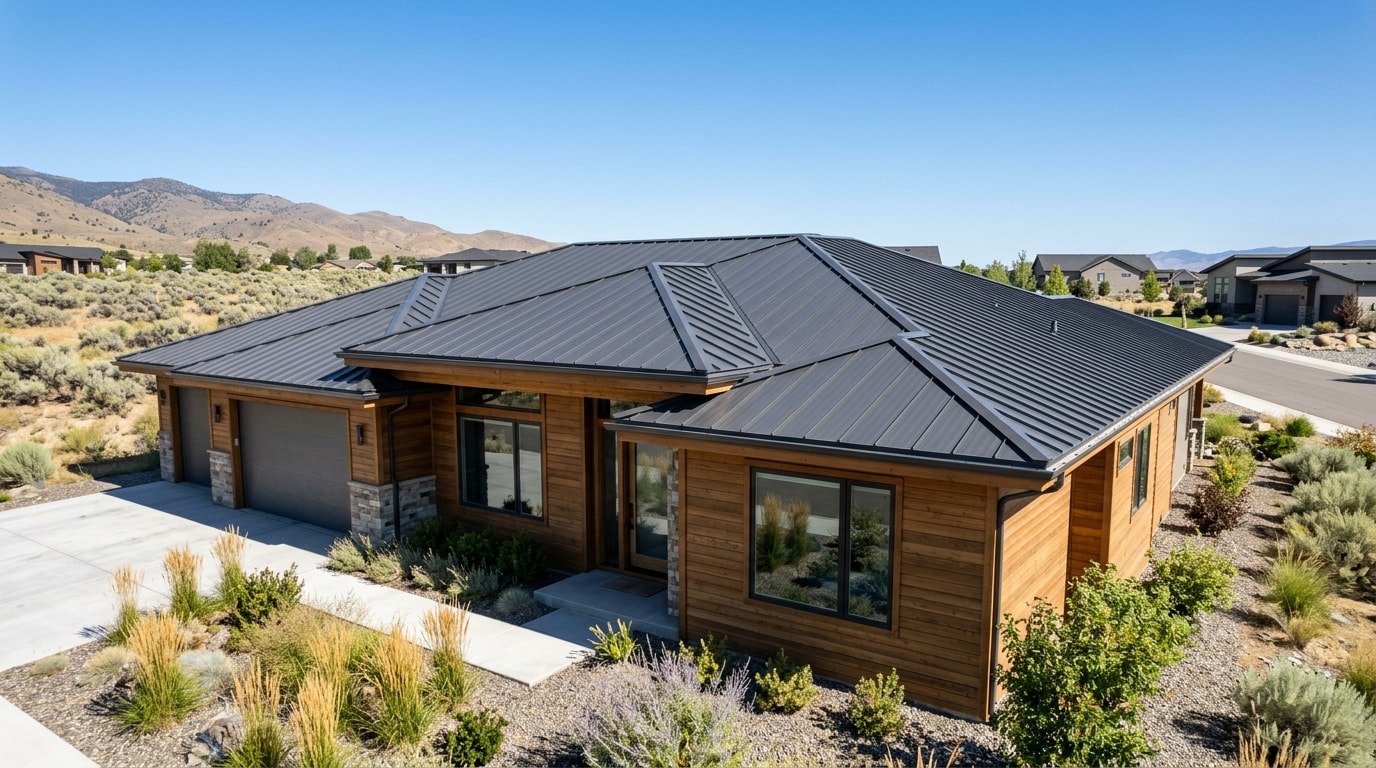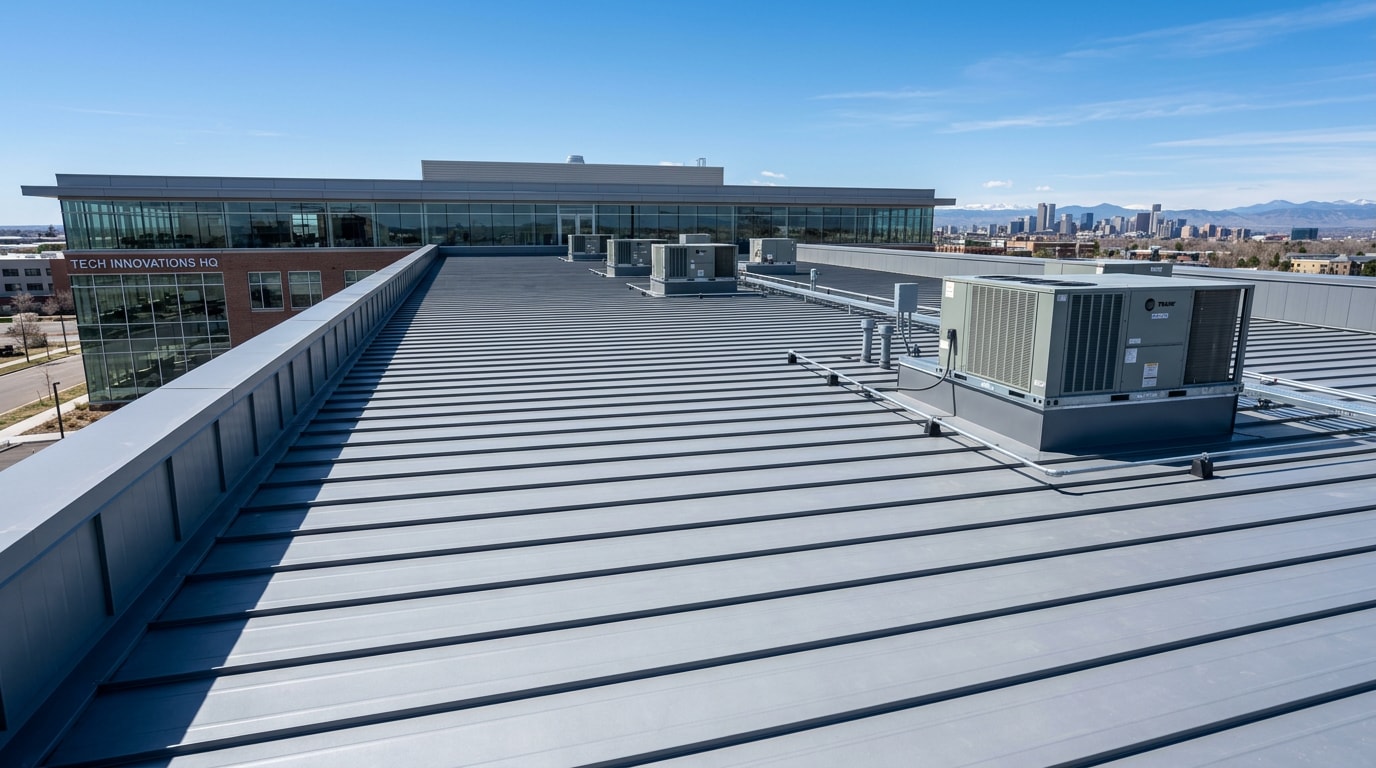
Searching for commercial metal roofing near me in Meridian, ID usually means you're already comparing bids and trying to figure out which system and which contractor actually fit your building. A commercial roof is a six-figure asset that protects inventory, equipment, and daily operations, so the wrong call costs far more than the roof itself. Here's how the systems, the pricing, and the contractor vetting process actually break down for Meridian properties.
Commercial Metal Roofing Systems: Standing Seam vs. R-Panel
Most commercial metal roofing projects near Meridian fall into one of two categories: standing seam or exposed-fastener R-panel. The profile and fastening method you choose changes how the roof performs, how it looks, and what it costs.
Standing seam metal roofing uses concealed fasteners hidden beneath raised panel seams instead of screws driven through the panel face. That design keeps water out of fastener penetrations entirely, which is why it holds up well under wind-driven rain and heavy snow load on low-slope commercial buildings. Concealed-fastener panels also give offices, retail storefronts, and other high-visibility buildings a cleaner finished look, since there are no exposed screw heads to streak or back out over time.
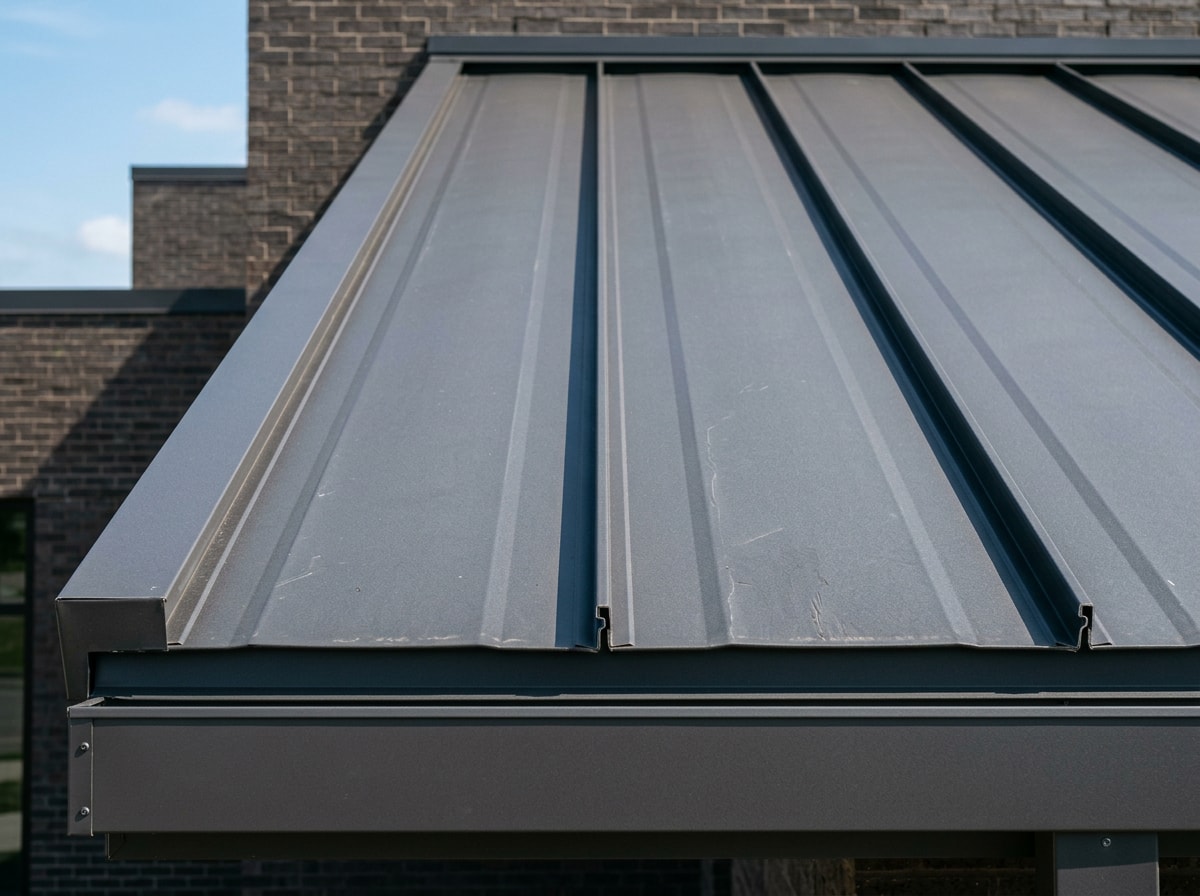
R-panel, or exposed-fastener metal roofing, costs less upfront and works well for warehouses and back-of-house buildings where appearance matters less than budget. The tradeoff is that exposed fasteners need periodic tightening or replacement over the roof's life, since the gaskets under the screw heads degrade faster than a concealed seam ever will.
How Much Does Commercial Metal Roofing Cost Per Square Foot?
Commercial metal roofing typically runs between roughly $7 and $14 per square foot installed, depending on panel gauge, finish, roof pitch, and detailing complexity. Standing seam systems sit at the higher end of that range because of concealed fasteners and labor-intensive flashing work, while R-panel options run closer to the lower end.
| System | Install Cost (per sq ft) | Typical Lifespan | Best Fit |
|---|---|---|---|
| R-panel metal | $7 – $9 | 25–35 years | Warehouses, back-of-house buildings |
| TPO membrane | $6 – $9 | 15–20 years | Big-box retail, office flat roofs |
| EPDM membrane | $6 – $10 | 15–20 years | Warehouses, simple roof geometry |
| PVC membrane | $8 – $12 | 20–25 years | Restaurants, light industrial with rooftop exhaust |
| Standing seam metal | $10 – $14 | 40+ years | Offices, retail, long-term-use buildings |
Membrane systems generally win on initial budget, while standing seam metal roofing wins on total lifecycle cost for buildings expected to stay in service for decades. For an exact number based on your building's size and roof condition, request a free estimate rather than relying on a square-footage average.
Why the Contractor Matters More Than the Material
The roofing material you pick matters less than who installs and maintains it. Two buildings with identical standing seam or TPO systems can end up with completely different outcomes depending on installer quality, flashing details, and follow-up service.
A commercial roofing contractor who skips a permit step or misapplies fasteners can void a manufacturer's warranty before year one. Downtime from a leak that shuts down a retail floor or warehouse line costs more than most repairs would have. That's why the contractor decision carries as much weight as the system itself.
Working with a local roofing company based in or near Meridian also means faster response during storm season and crews who already understand Treasure Valley wind and snow patterns. On past Meridian commercial jobs, the recurring failure point we see isn't the membrane or the panel, it's flashing detail around rooftop HVAC curbs that was never properly tied into the field membrane. Confirm any contractor you're considering is licensed and insured before signing anything.
How to Vet a Commercial Metal Roofing Contractor Near Meridian
Vetting a contractor takes more than checking star ratings. Before requesting a bid, confirm the company's registration status, local track record, and familiarity with Meridian's permitting process, which runs through the City of Meridian's own building department rather than Ada County.
Local experience means a contractor is registered with the Idaho Contractors Board (administered by the Idaho Division of Occupational and Professional Licenses), has pulled City of Meridian commercial permits, and has crews who've installed roofs through actual Treasure Valley snow loads and summer UV exposure, not just general roofing experience from somewhere else.
Before hiring, ask a prospective contractor:
- Can you provide your Idaho Contractors Board registration number so I can verify it?
- How many City of Meridian commercial permits have you pulled in the last two years?
- What's your average response time for emergency leak calls in Meridian?
A contractor who answers these without hesitation has likely done the work locally, not just advertised for it. Browse our roofing contractor services to see completed project types across the Treasure Valley.
Commercial Roofing Services We Offer in Meridian, ID
Metal roofing is one piece of a broader scope of commercial roofing services a Meridian building might need. Depending on the property's age and condition, that could mean a full roof installation, a roof replacement of an aging system, isolated roof repair, a scheduled roof inspection plan, or storm damage repair after a wind or hail event.
Retail roofing projects along corridors like Eagle Road and Fairview Avenue often involve flat or low-slope sections tied into parapet walls and rooftop HVAC units. Light industrial roofing near the Ten Mile corridor tends to cover larger spans with higher snow-load and drainage demands, especially on older systems nearing the end of their service life.
Office buildings, multi-tenant retail centers, and warehouses all fall under this same umbrella, but each one calls for a slightly different approach to detailing, insulation, and drainage. See our residential re-roofing guide for Meridian homeowners if you're weighing similar replacement timing questions on a mixed-use property.
Which Commercial Buildings Benefit Most from Metal Roofing
Metal roofing fits a wide range of commercial property types, not just warehouses. Each building type benefits for a slightly different reason:
- Warehouse and industrial roofing: large open spans benefit from standing seam's long service life and low maintenance demands over decades of use.
- Retail roofing: concealed fasteners and clean panel lines suit customer-facing storefronts and shopping centers.
- Offices and community buildings: durability and reflective finishes lower long-term operating costs.
- Schools and churches: long warranty periods reduce the chance of disruptive mid-life replacements.
- Multifamily roofing: sloped sections on apartment and mixed-use buildings pair well with standing seam's wind and water resistance.
Commercial metal roofing isn't the right fit for every budget, but for buildings expected to stay in service long-term, it's often the lowest total cost of ownership. Reflective metal finishes can also help with cool-roofing energy performance; the Cool Roof Rating Council's code and standards resource outlines the reflectance thresholds many commercial energy codes reference.
Repair vs. Replacement: Making the Call
Not every roof problem calls for full replacement, and not every repair actually solves the underlying issue. Facility managers need a framework for telling the difference before spending money on either option.
Start with a moisture survey. If scans show saturated insulation across large sections of the roof, repairs will only patch a symptom while wet insulation keeps losing R-value and sagging the deck underneath.
Look at the extent of visible damage. Loose fasteners, isolated rust spots, or a few separated seams on an otherwise sound roof usually point toward targeted repair. Widespread seam separation or rust across multiple panels tips the math toward replacement.
Factor in age. A metal roof past 30 years old with recurring issues is a different conversation than a five-year-old roof with one storm-damaged section.
Check your maintenance history. Skipping scheduled maintenance can void a metal roof warranty even when the material itself is still structurally sound, which sometimes forces a replacement decision regardless of physical condition. The National Roofing Contractors Association recommends biannual inspections, in spring and fall, plus an extra check after any major storm, specifically because small issues caught early rarely require full replacement.
Meridian Weather and Code Details That Affect Your Roof
Meridian's climate puts real stress on commercial roof details. Hot, dry summers bake membrane and sealant, while winter brings snow events that load flat and low-slope roofs unevenly, especially around parapets and rooftop units. That swing between extremes is harder on drainage, insulation, and edge securement than either season alone.
Local design criteria set minimum snow and frost-depth requirements that affect how much weight a roof structure must safely carry, which matters any time you're adding rooftop equipment, re-roofing with a heavier system, or increasing insulation thickness. The City of Meridian's building services design criteria lists the adopted code editions and site design figures a contractor should confirm before finalizing a roofing plan.
Working with a contractor who routinely handles projects across the Treasure Valley means these local code and climate details get built into the plan from the start instead of surfacing as a surprise mid-project. You can also browse our homepage for a full look at our roofing, siding, and window services across the region.
FAQ
What maintenance does a commercial metal roof need?
Routine maintenance includes checking fasteners for backing out or loosening, inspecting seams and sealant at penetrations for cracking, and clearing debris away from edge metal and drains. Most commercial metal roofs need a professional inspection at least twice a year, with extra checks after major storms. Catching a loose fastener or small seam gap early typically costs far less than repairing the water damage it would eventually cause.
How long should a commercial roof last in Idaho?
Lifespan varies by system. TPO and EPDM membranes typically last 15-20 years in Idaho's climate, PVC runs slightly longer, and standing seam metal roofing commonly reaches 40 years or more with proper maintenance. Actual results depend on installation quality, slope, and upkeep, which is why regular professional inspections matter regardless of system type.
What's the difference between R-panel and standing seam metal roofing?
R-panel uses exposed screws driven through the panel face, which costs less upfront but requires periodic fastener maintenance. Standing seam uses concealed fasteners hidden under raised seams, costs more to install, and holds up longer with less maintenance, making it the common choice for customer-facing buildings.
Does a commercial re-roof in Meridian require a permit?
Yes. Commercial roofing work in Meridian is permitted through the City of Meridian's building department rather than Ada County. A licensed contractor pulls the permit before work starts and schedules the required inspections along the way.
What warranties protect my commercial roofing investment?
Two separate warranties matter. The manufacturer's warranty, often called an NDL (no dollar limit) warranty, covers material defects for a set term. The workmanship warranty, provided by your installing contractor, covers installation errors separately from material issues. Always get both in writing, confirm their term lengths, and ask what maintenance requirements could void either one before signing a contract.
How much does commercial metal roofing cost per square foot?
Commercial metal roofing typically costs between roughly $7 and $14 per square foot installed, depending on panel gauge, finish, roof pitch, and complexity. Standing seam systems sit at the higher end of that range due to concealed fasteners and labor-intensive detailing, while R-panel options run closer to the lower end. Request a free estimate for an exact price based on your building's size and roof condition.